- Introduction
- One of South Bohemia’s Most Famous Castles
- A Deep Connection to Graz’s Eggenberg Palace
- Walls That Look Like Real Stonework
- Even Some of the Windows Are Painted
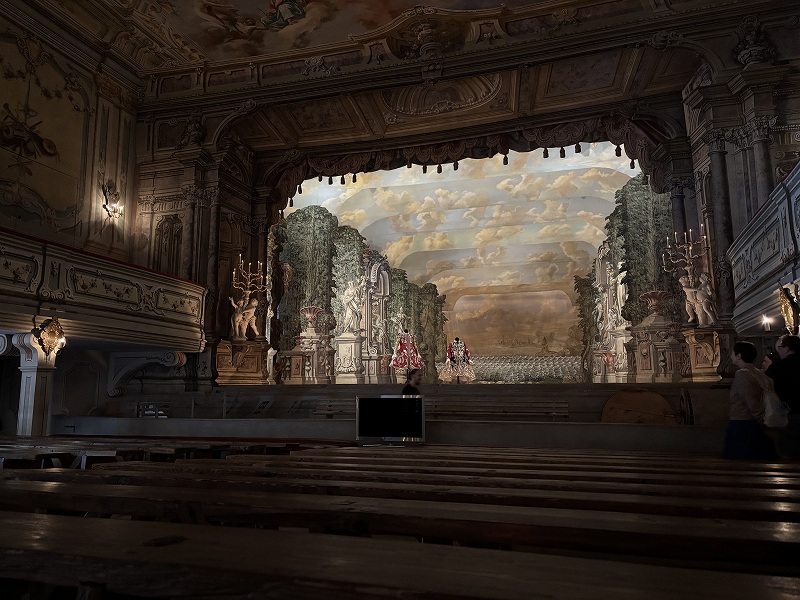
- One of the Few Surviving Baroque Theatres
- The Eggenberg Family Also Played a Role in the Theatre
- A Guided Tour Lasting About an Hour
- Learning About the History from the Audience Seats
- Behind the Scenes: A World Powered by People
- Even Rain and Wind Were Created by Hand
- Actual Performances Are Held Several Times a Year
- One of Český Krumlov Castle’s Most Unique Attractions
- Why Are There Bears at the Castle?
Introduction
In my previous article, I introduced the historic center of Český Krumlov. This time, I would like to take a closer look at the symbol of the town: Český Krumlov Castle (Státní hrad a zámek Český Krumlov).
The Castle Garden, which stretches out behind the castle, was introduced in my previous article, so this time I will focus mainly on the castle itself and its famous Baroque Theatre.
(当ブログの記事をまとめたポータルページはここです)
(オンラインショップを始めてみました。是非こちらからご覧になってください。)
Amazon.co.jp
あなたと一緒に作る海外旅行【トラベル・スタンダード・ジャパン】

Český Krumlov Castle and the Eggenberg Family
One of South Bohemia’s Most Famous Castles
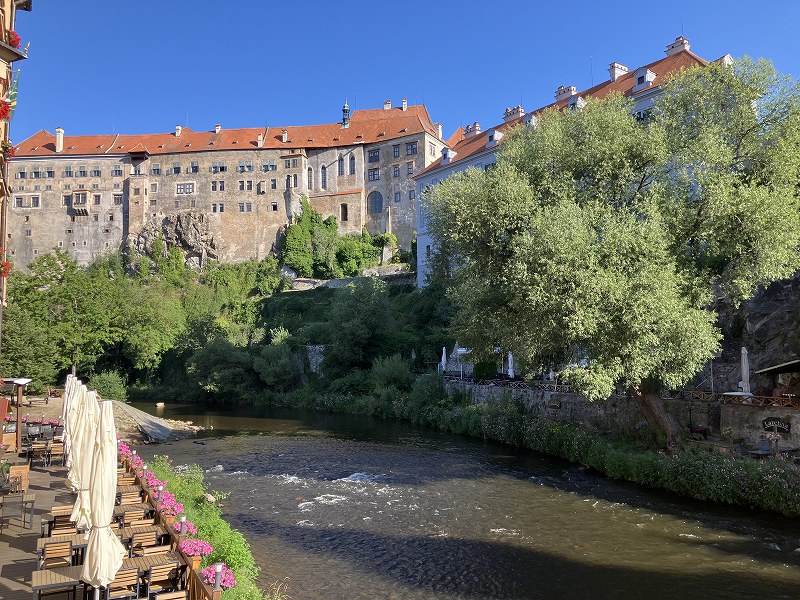
Český Krumlov Castle is one of the Czech Republic’s most famous historic castles. It is believed to have been founded around the 13th century by the Vítkovci family.
Over the centuries, ownership passed to several powerful noble families, including:
- the Rosenberg family
- the Eggenberg family
- the Schwarzenberg family
Each family expanded and remodeled the complex, gradually transforming it into the magnificent castle we see today.
It is often described as one of the largest castle complexes in the Czech Republic after Prague Castle and is a central landmark of the UNESCO World Heritage-listed Český Krumlov Historic Centre.
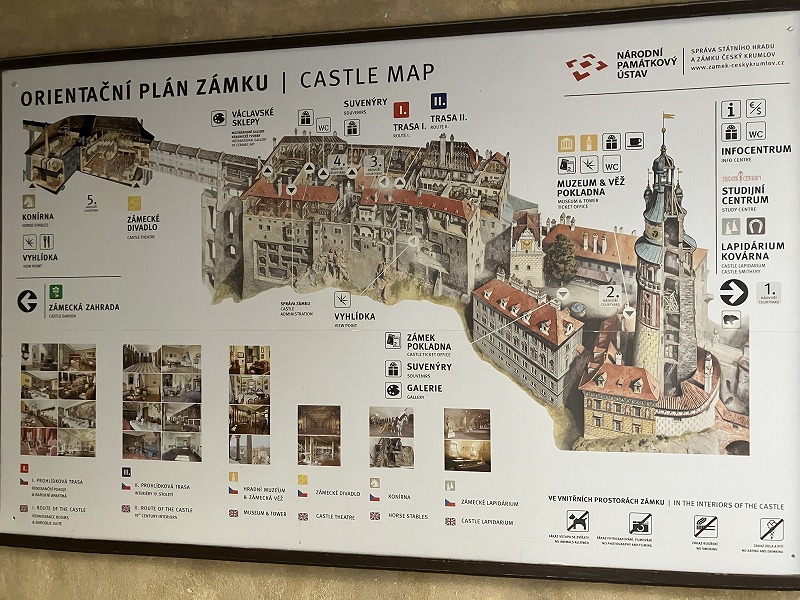
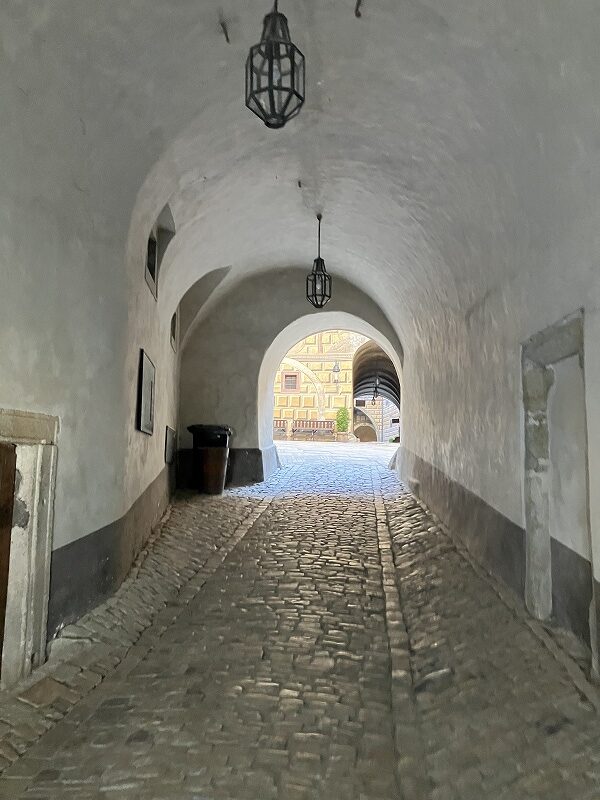
A Deep Connection to Graz’s Eggenberg Palace
For someone living in Graz, Austria, the castle’s connection with the Eggenberg family is particularly interesting.
In the early 17th century, the influential Eggenberg family served the Holy Roman Emperor Ferdinand II and was granted the Český Krumlov estate in recognition of its service.
In other words, the same family that built Graz’s UNESCO World Heritage-listed Eggenberg Palace also became the lords of Český Krumlov Castle.
Even today, you can find the Eggenberg family’s coat of arms and other traces of their time at the castle. Seeing them makes the historical connection between Graz and Český Krumlov feel surprisingly tangible.
Castle Walls Covered in Trompe-l’œil Decorations
Walls That Look Like Real Stonework
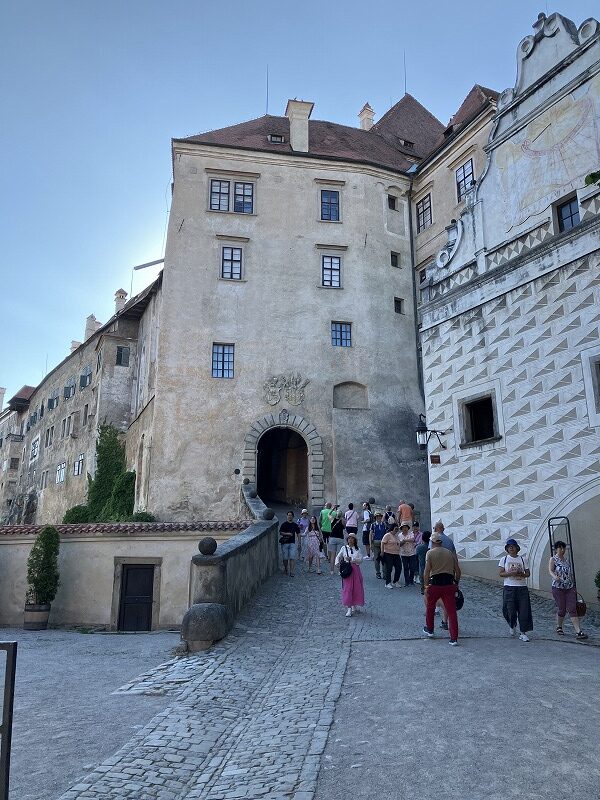
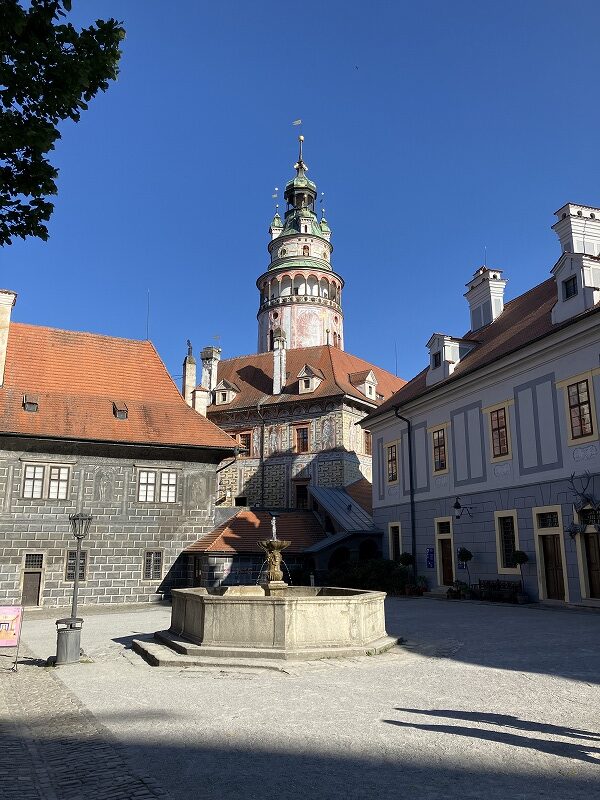
One of the first things that catches your eye at Český Krumlov Castle is the elaborate decoration covering many of its buildings.
Look closely and you will notice something surprising: much of the magnificent stonework and many of the columns are actually painted.
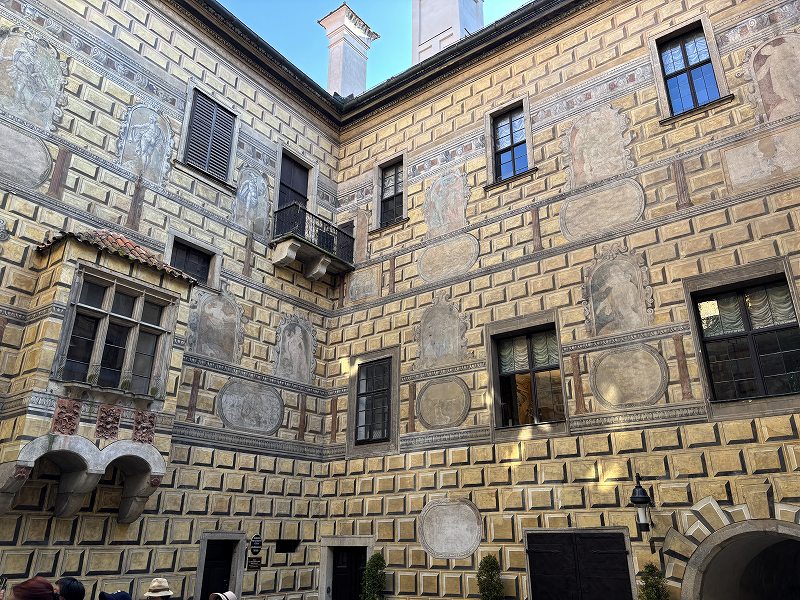
The walls feature Renaissance-era techniques such as sgraffito and trompe-l’œil painting, creating the illusion of three-dimensional columns and architectural decorations on what are actually flat surfaces.
Even Some of the Windows Are Painted
Even more interestingly, if you look carefully, you will find places where even the windows are painted.
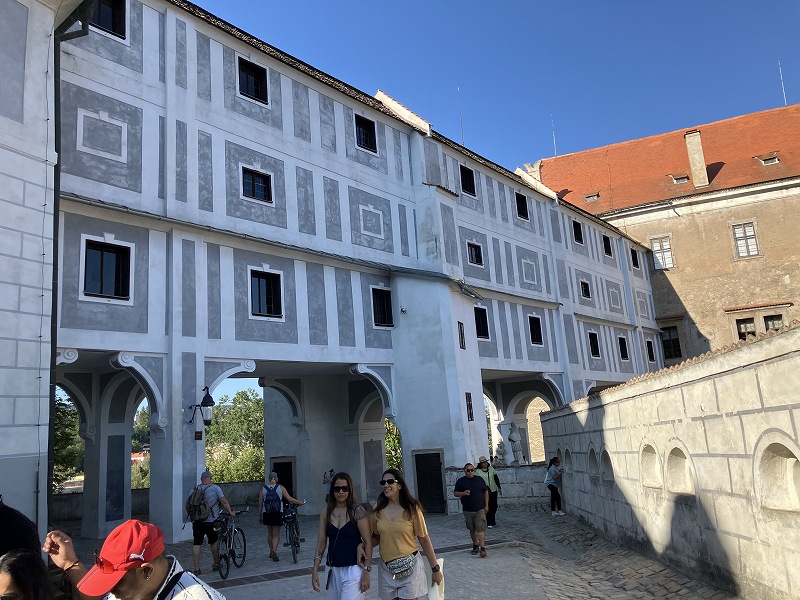
It is said that the original plan called for a more elaborate building with more windows, but financial limitations made that impossible, so the desired architectural features were recreated through painting.
It may have been a desperate cost-saving solution for the castle’s owners at the time, but
hundreds of years later, it has become one of the things that makes the castle such a unique and popular tourist attraction.
(当ブログの記事をまとめたポータルページはここです)
(オンラインショップを始めてみました。是非こちらからご覧になってください。)
Amazon.co.jp
あなたと一緒に作る海外旅行【トラベル・スタンダード・ジャパン】
Views of Český Krumlov from the Castle
From the castle’s corridors and viewing areas, you can enjoy panoramic views over the historic town.
In the middle of the town’s orange-roofed buildings stands the tall spire of St. Vitus Church, creating one of the most iconic views of Český Krumlov.
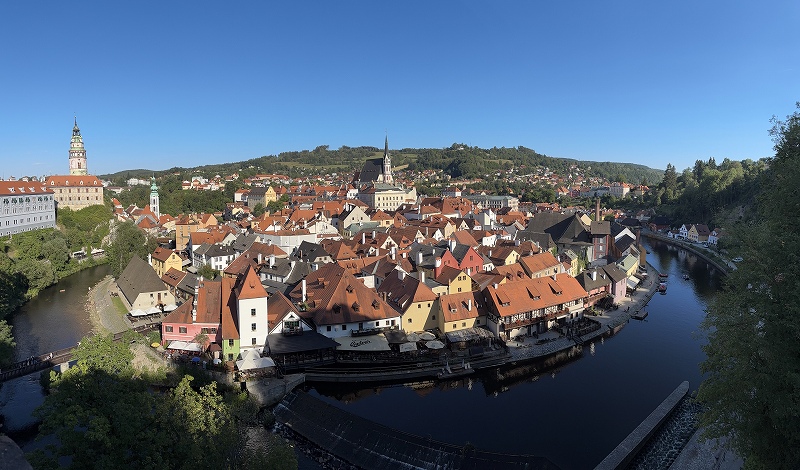
From above, you can also clearly see how the Vltava River makes a wide curve around the town.
The view from the castle is quite different from what you see while walking through the historic center, so it is definitely worth taking the time to enjoy it.
One of the World’s Most Remarkable Baroque Theatres
One of the Few Surviving Baroque Theatres
One of the biggest highlights of Český Krumlov Castle is undoubtedly the Baroque Theatre.
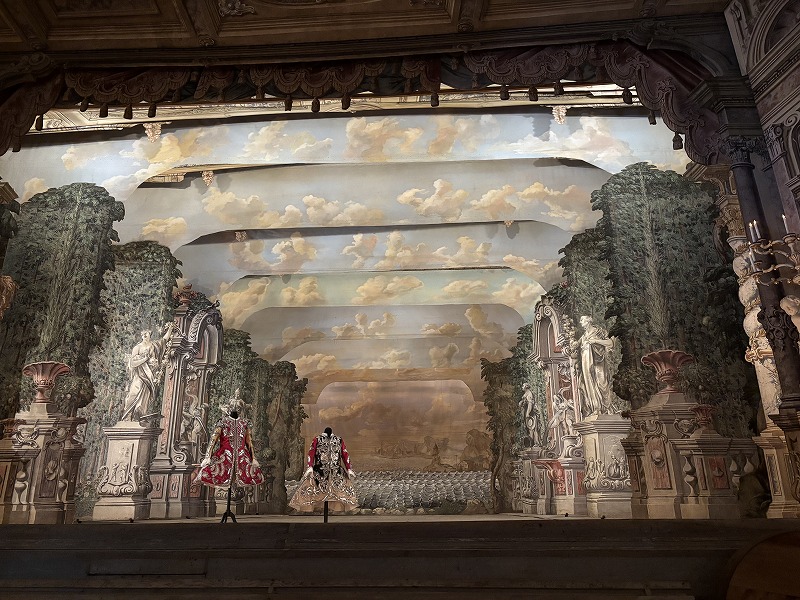
The theatre reached its present form in the 18th century and is known as one of the few Baroque theatres in the world to have survived with much of its original appearance remarkably intact.
Baroque theatres relied heavily on candles for lighting.
As a result, fires were extremely common, and most theatres across Europe were eventually destroyed.
That makes a theatre preserved in this condition exceptionally rare today.
Of course, for safety reasons, the original candle lighting has now been replaced with electric lighting.
The Eggenberg Family Also Played a Role in the Theatre
The foundations of the present theatre were developed in the late 17th century during the time of the Eggenberg family. The Schwarzenberg family later completed the theatre in its lavish 18th-century form.
Because many of the original stage mechanisms and props have survived, the theatre is highly valued from both theatrical and architectural history perspectives.
I Joined a Baroque Theatre Tour
A Guided Tour Lasting About an Hour
The Baroque Theatre cannot be visited independently; it is accessible through a guided tour.
(Note: Admission prices vary depending on the season, so please check the official website for the latest information.)
Learning About the History from the Audience Seats
At the beginning of the tour, you spend about 30 minutes sitting in the audience while the guide explains the theatre.
The guide explains the history of the theatre, the kinds of performances that were held there, and how the various stage mechanisms worked.
On the stage, you can also see exhibits such as:
- stage scenery
- theatre costumes
- props
These provide an interesting glimpse into how performances were produced centuries ago.
Behind the Scenes: A World Powered by People
We then moved backstage.
This was particularly fascinating. Under the stage floor, there are various gears and wooden mechanisms of different sizes.
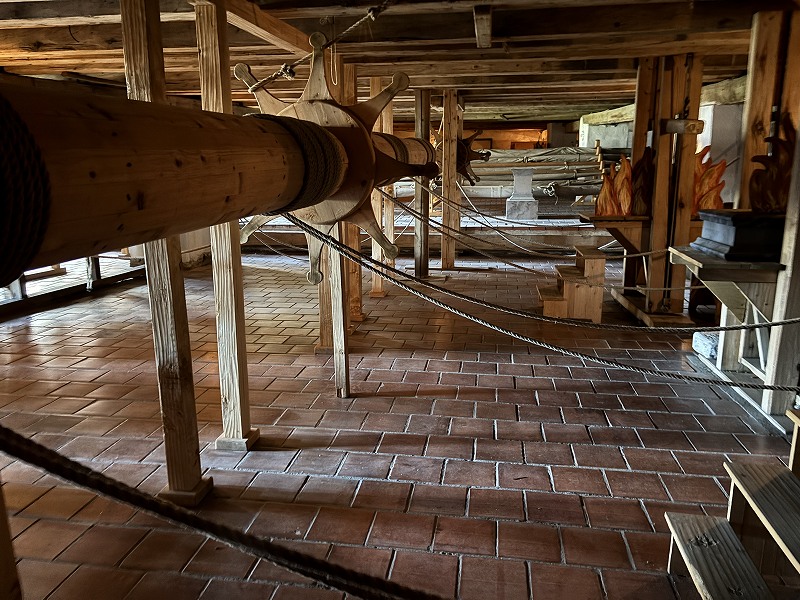
These mechanisms were operated manually to rotate scenery and change scenes during performances.
You can also see mechanisms for:
- making performers suddenly appear or disappear
- concealing lighting equipment
- moving around behind the stage
Seeing these ingenious systems up close makes it easy to appreciate just how much work went into producing a performance in the past.
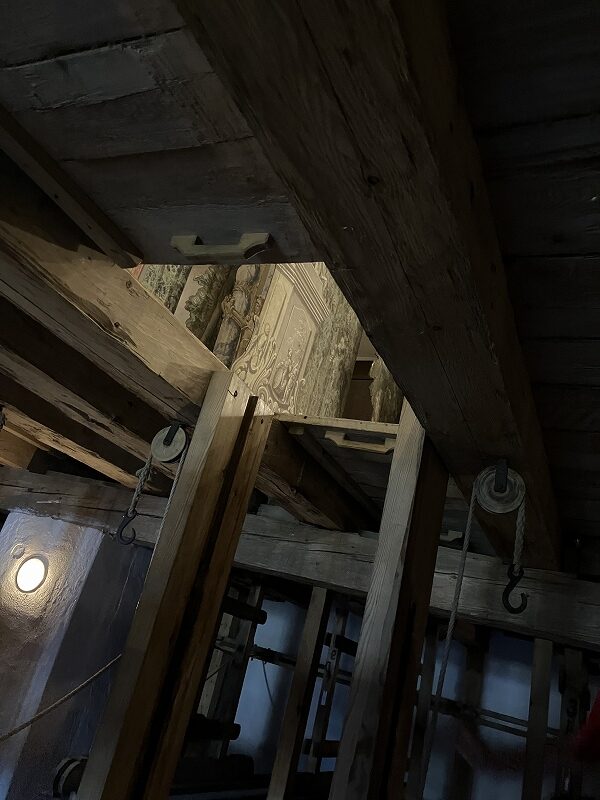
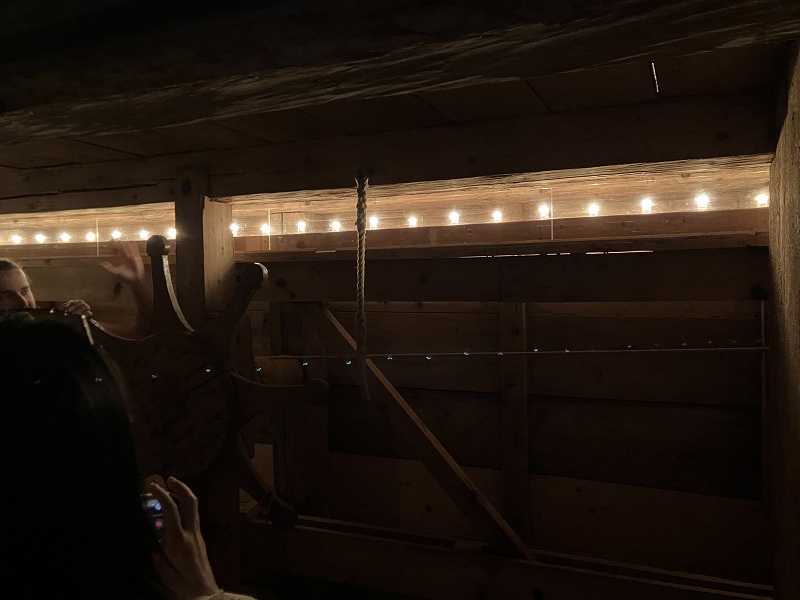
Even Rain and Wind Were Created by Hand
Another surprising detail was that even the sound effects were created manually.
Using specially designed devices, the theatre staff could recreate sounds such as:
- rain
- thunder
- wind
It is amazing to think that things that can now be produced with the push of a button were once created entirely by hand by skilled theatre workers.
Actual Performances Are Held Several Times a Year
Even today, the theatre is used only a limited number of times in order to preserve it. However, Baroque operas and other performances are still occasionally held here, usually several times a year.
At the end of the tour, you can watch a video showing one of these performances. The tour lasts about one hour in total.
There Are Real Bears in the Castle Moat!
One of Český Krumlov Castle’s Most Unique Attractions
One thing that surprises first-time visitors to Český Krumlov Castle is the fact that real bears are kept in the castle moat.
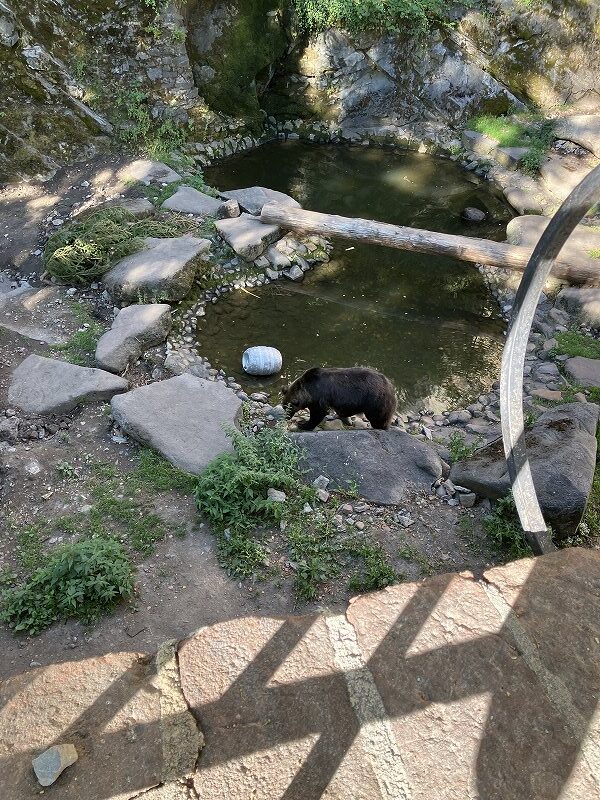
As you cross the bridge leading to the castle, you can look down and sometimes see the bears strolling around or taking a nap in the shade.
It is the kind of sight that makes you stop and look twice: “Wait, are there really bears down there?” Even adults are likely to be surprised, not just children.
Why Are There Bears at the Castle?
This is not simply a modern tourist attraction. It is a tradition that dates back to the late 16th century.
The Rosenberg family (Rožmberk family), who were the castle’s lords at the time, were proud of their claimed blood relationship with the prominent Italian Orsini family.
The name Orsini is said to derive from the Italian word orso, meaning “bear,” and bears consequently became a symbol of the family and were kept at the castle.
The bears living at the castle today are not descendants of the original bears, but the tradition has continued to the present day and has become one of the defining attractions of Český Krumlov Castle.
Being able to learn about the history of the castle and unexpectedly see real bears at the same time is certainly something you do not get to experience at many other castles.
(当ブログの記事をまとめたポータルページはここです)
(オンラインショップを始めてみました。是非こちらからご覧になってください。)
Amazon.co.jp
あなたと一緒に作る海外旅行【トラベル・スタンダード・ジャパン】
Final Thoughts
Český Krumlov Castle is much more than a place to enjoy beautiful views of the historic town. Its history and architectural techniques are equally fascinating.
The things that impressed me most were:
- its deep historical connection with the Eggenberg family of Graz
- the trompe-l’œil decorations covering the castle walls
- the UNESCO World Heritage townscape seen from the castle
- the remarkably well-preserved Baroque Theatre, one of the few of its kind in the world
- the manually operated stage mechanisms and special effects behind the scenes
These were just some of the highlights.
Simply walking around the historic center of Český Krumlov is already enjoyable, but if you visit the town, I highly recommend making time for the castle as well. It is a great opportunity to experience the history of the Eggenberg family and see the remarkable Baroque Theatre for yourself.

コメント