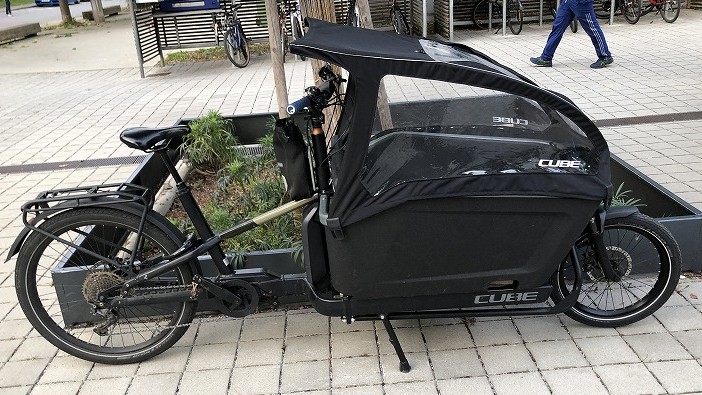
- Introduction
- Children Under 12 Generally Need a Bike License or Adult Supervision
- Helmets Are Legally Required for Children
- How to Get a Radfahrausweis (Bicycle License)
- Bicycle Safety Education at Austrian Schools Is Surprisingly Comprehensive
- Schools Also Provide Teaching Materials and Equipment
- What Surprised Me as a Japanese Person
- Conclusion
Introduction
One of the areas where you can really notice the differences between Austria and Japan is the rules surrounding children and bicycles.
In Japan, it is common to see elementary school children riding bicycles on their own. In Austria, however, things are quite different. The rules are clearly established through laws, education, and a strong emphasis on safety, so children are not simply expected to “figure things out” on their own.
In this article, I will explain Austria’s rules and system for children riding bicycles, based on what I have learned and observed while living in Austria.
(当ブログの記事をまとめたポータルページはここです)
(オンラインショップを始めてみました。是非こちらからご覧になってください。)
Amazon.co.jp
あなたと一緒に作る海外旅行【トラベル・スタンダード・ジャパン】

Children Under 12 Generally Need a Bike License or Adult Supervision
Let’s start with one of the most important rules.
In Austria, children under the age of 12 generally need a “Radfahrausweis” (bicycle license) to ride a bicycle independently.
If they do not have one, they must be accompanied by an adult aged 16 or older.
In other words, unlike in Japan, it is generally not acceptable for an elementary school child to simply ride a bicycle around independently.
Without a license, riding alone is not permitted, so in practice, children are expected to ride with an adult, particularly when using public roads.
For Japanese people, this can feel surprisingly strict.
Helmets Are Legally Required for Children
Austria also has strict safety rules when it comes to children riding bicycles.
👉 Children under 12 are legally required to wear a helmet.
This applies when they are:
- Riding their own bicycle
- Being carried on a parent’s bicycle
- Riding in a bicycle trailer
In other words, the rule covers all of these situations.
The emphasis seems to be less about punishment and more about making safety a habit. In everyday life, it is very common to see children wearing helmets.
This is quite different from the more flexible attitude toward bicycle helmets that you may encounter in Japan.
How to Get a Radfahrausweis (Bicycle License)
Children who want to ride independently need what is commonly referred to as a “bicycle license.”
The process generally involves the following steps:
① Written Test at School
First, children receive lessons on traffic rules at school and take a written test.
- Usually conducted in German
- Some schools or regions may offer support in English
The material is quite practical, covering things such as traffic signs, right-of-way rules, and other situations children may encounter on the road.
② Practical Test with ÖAMTC
After that, children take a practical test with ÖAMTC, Austria’s major automobile club.
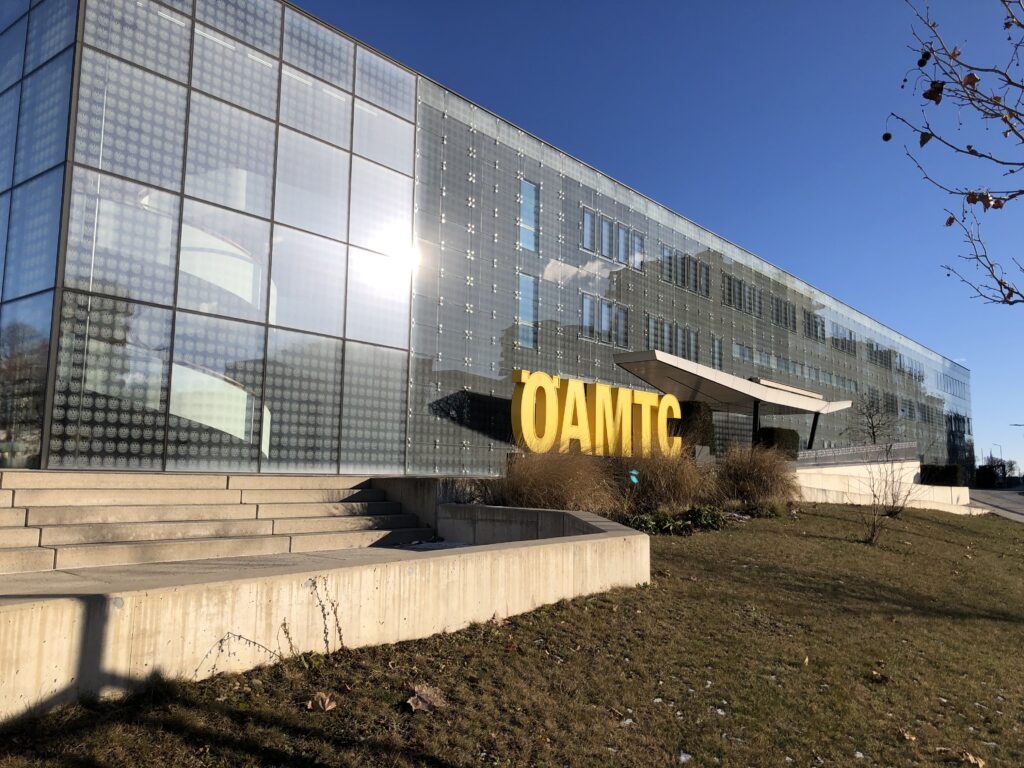
The test takes place on a course designed to simulate real traffic situations. Children are checked on things such as:
- Turning left and right
- Understanding right-of-way
- Checking their surroundings
and other basic traffic skills.
It is not something to take too lightly, either. In some groups, one child may fail the test, so preparation is important!
Once they pass, they officially receive their bicycle license.
Bicycle Safety Education at Austrian Schools Is Surprisingly Comprehensive
This is another major difference from Japan.
In Austria, bicycle skills and traffic safety training are incorporated into school education.
- Training takes place once a week or several times a week during the relevant period of the school year
- Practice is conducted on school grounds or nearby roads
- Exercises are designed to simulate real traffic situations
The approach is very practical. The goal is not simply to teach children how to ride a bicycle, but how to ride safely as part of everyday traffic.
Schools Also Provide Teaching Materials and Equipment
Another thing that surprised me was the level of support provided by schools.
- A dedicated bicycle safety textbook is provided in German
- Bicycles and helmets are available at school
This means that even children who do not have a bicycle at home can receive a certain amount of practical training at school.
It reflects the idea that traffic safety education is an important part of public education.
What Surprised Me as a Japanese Person
Bicycles Are Treated as a Full Part of Traffic
In Austria, bicycles are treated as a serious part of the road traffic system, just like cars, and cyclists are expected to follow traffic rules strictly.
- Right-of-way rules
- Riding on the right-hand side
- Rules for merging and entering traffic
Children learn these concepts from an early age. This is quite different from Japan, where bicycles are sometimes treated more like an extension of pedestrian traffic.
Bicycle Safety Education Is Almost a Requirement
With school-based training and a formal testing system, it is difficult for children to simply start riding without learning the basic rules.
This is a significant difference.
In Japan, bicycle safety education can depend heavily on individual families:
- Whether parents teach their children the rules
- How much bicycle safety is covered at school
In Austria, on the other hand, traffic skills are treated as an important part of children’s education.
(当ブログの記事をまとめたポータルページはここです)
(オンラインショップを始めてみました。是非こちらからご覧になってください。)
Amazon.co.jp
あなたと一緒に作る海外旅行【トラベル・スタンダード・ジャパン】
Conclusion
Compared with Japan, Austria’s rules for children riding bicycles are relatively strict and highly structured.
The key points are:
- Children under 12 generally need a bicycle license or adult supervision
- Helmets are legally required for children under 12
- Schools provide both written and practical bicycle safety education
- Traffic safety is treated as an important part of children’s education
At first glance, the system may seem overly strict. However, it can also be seen as a logical system designed to reduce the risk of bicycle accidents.
After living in Austria, there have been many situations where I have thought, “This really does make cycling safer.”
If you are living in Austria with children, understanding these differences from Japan can be extremely useful. Even for families who are only visiting, knowing the basic rules can make cycling around Austria much easier and safer.

コメント