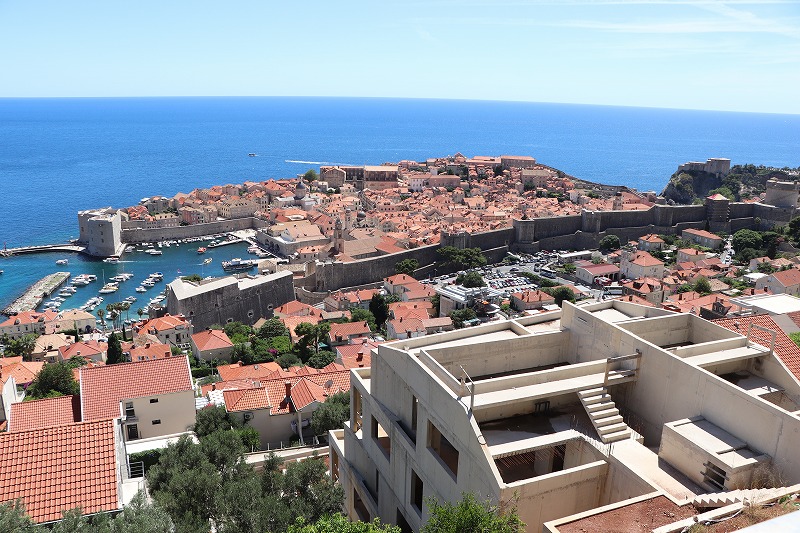
- Introduction
- What Are the Dubrovnik City Walls?
- How to Get to Dubrovnik
- Walking Along the Dubrovnik City Walls
- Old Town Views to the East, Adriatic Sea Views to the West
- Traces of the Croatian War of Independence
- Visit Early in the Morning in Summer
- The Cafés on the Walls Have Amazing Views—but They’re Expensive
- Conclusion
Introduction
Have you ever heard of Dubrovnik, Croatia?
Since there are no direct flights from Japan, I had never heard of Dubrovnik before moving to Austria. However, many locals I met here repeatedly told me that it was a place I absolutely had to visit. When I looked it up, I discovered that Dubrovnik is one of the most famous tourist destinations in Europe.
It has also reportedly been used as inspiration for the Studio Ghibli films Kiki’s Delivery Service and Porco Rosso.
Since I live in Graz, which offers relatively easy access to Southern Europe, I decided it was time to see Dubrovnik for myself.
One of the biggest highlights of any Dubrovnik trip is the city walls, which I will introduce in this article.
(当ブログの記事をまとめたポータルページはここです)
(オンラインショップを始めてみました。是非こちらからご覧になってください。)
Amazon.co.jp
あなたと一緒に作る海外旅行【トラベル・スタンダード・ジャパン】

What Are the Dubrovnik City Walls?
When you think of Dubrovnik, the city walls are probably one of the first things that come to mind.
The massive walls surrounding the Old Town, together with the beautiful historic buildings inside them, form one of Dubrovnik’s most iconic sights. The Old Town of Dubrovnik is also a UNESCO World Heritage Site.
Walking along the top of the walls allows you to enjoy all of the following at once:
- The orange rooftops of the Old Town
- The deep blue waters of the Adriatic Sea
- Fortresses and churches scattered throughout the city
Even though Dubrovnik has many attractions, if you are short on time, the city walls are definitely one of the first places I would recommend visiting.
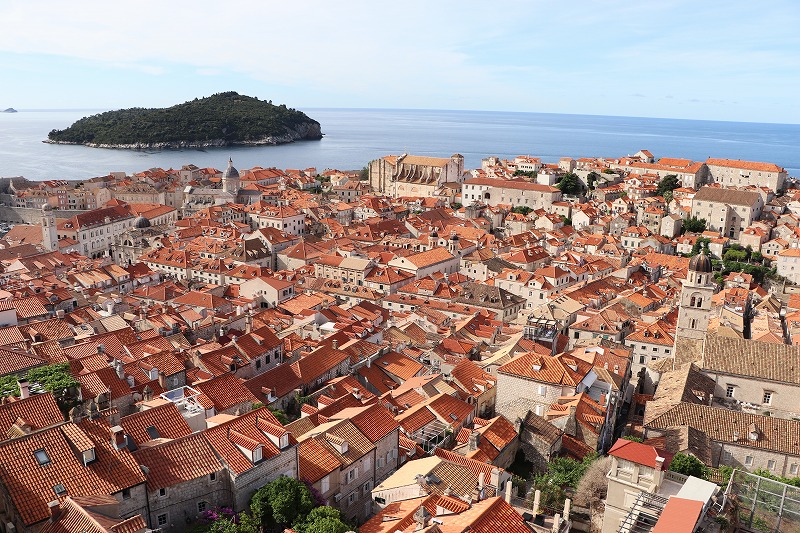
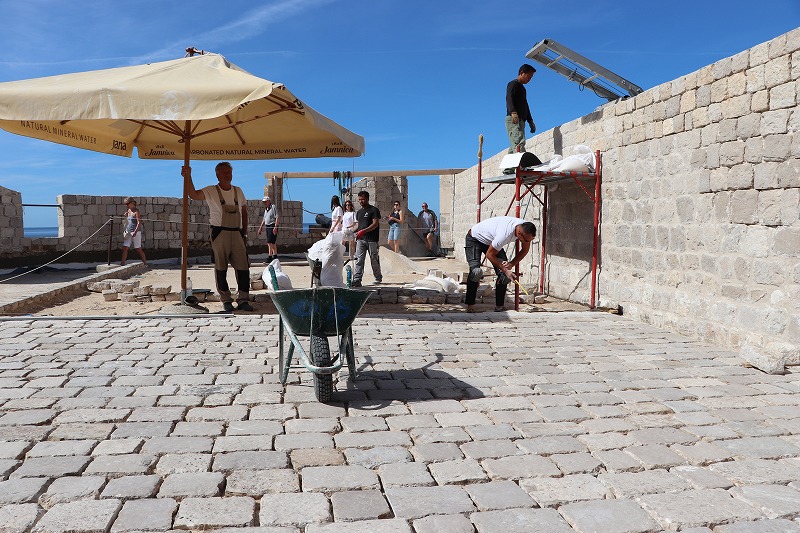
The walls and Old Town were also damaged by shelling during the Croatian War of Independence in the 1990s. Most of the area has since been restored, but traces of that history can still be seen in various places.
How to Get to Dubrovnik
The first question is, of course, where exactly is Dubrovnik?
Dubrovnik is located at the very southern tip of Croatia.
I jokingly think of it as “the very tip of Croatia’s corner.”
Due to the region’s complicated history, mainland Croatia was once divided by a section of Bosnian territory. Since the opening of the Pelješac Bridge, it is now possible to travel through Croatia without crossing Bosnia and Herzegovina. However, Dubrovnik is still quite far south, so getting there can take some time.
Croatia also does not have as extensive a railway network as Austria, and Dubrovnik has no railway station.
If you travel by car, the available roads are limited, and traffic jams can occur during the tourist season. Even from Zagreb, the drive can take around 10 hours.
Apparently, Austrians are perfectly happy to drive there anyway(笑), but for most Japanese travelers, flying is probably the easiest option.
From Austria, you can travel to Dubrovnik via:
- Direct flights from Vienna Airport to Dubrovnik
- A domestic flight via Zagreb
From Dubrovnik Airport to the Old Town, typical options include:
- Airport bus: around €10
- Taxi: around €50
- Uber: around €20–30
If you are traveling with three or more people, Uber can be a particularly good value.
Walking Along the Dubrovnik City Walls
There are several entrances to the city walls. I entered near the Chapel of St. Luke on the eastern side of the Old Town.
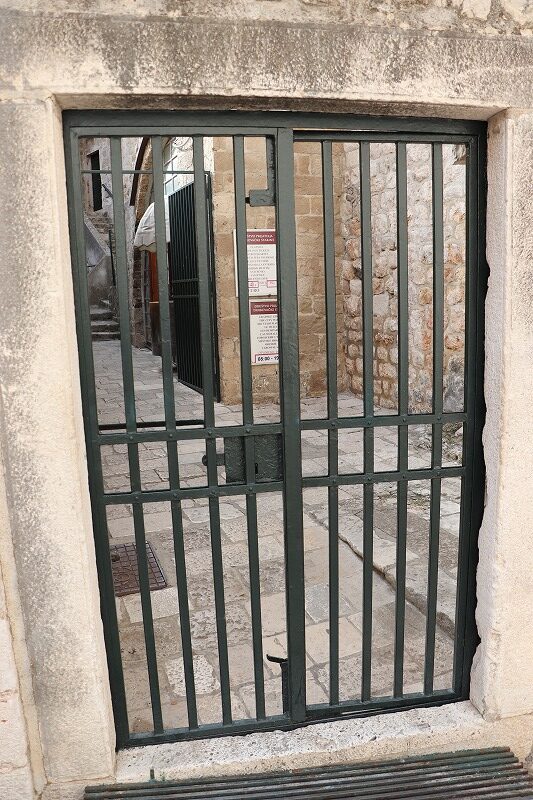
Admission was:
- Adults: €40
- Children: €15
To be honest, that is quite expensive.
I arrived right at opening time at 8:00 a.m., and there were no lines at either the ticket counter or the entrance. I was able to get in very smoothly.
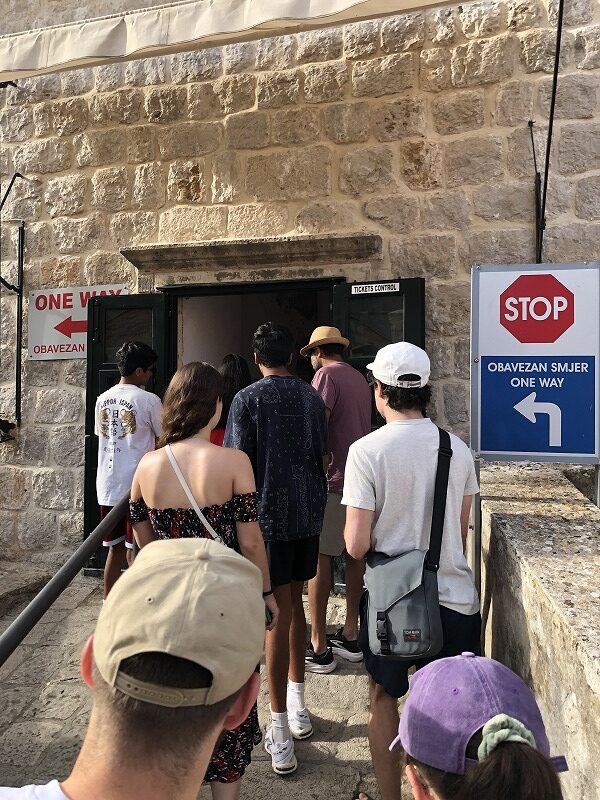
For adults, however, I would recommend purchasing the Dubrovnik Card.
The card not only includes admission to the city walls but can also be used for:
- Museums
- Selected tourist attractions
- City buses
Since the price is roughly comparable to admission to the city walls alone, it is generally a good choice if you are planning to visit the walls.
The Dubrovnik Card can be purchased online, and you can simply show the QR code on your smartphone when entering.
I initially wondered whether it would be possible to walk multiple laps around the walls. However, QR codes were checked again near the gate by the Chapel of St. Luke, so I assume visitors may be required to exit there after completing a lap. I simply exited normally, so I did not have to find out whether a second lap was possible.
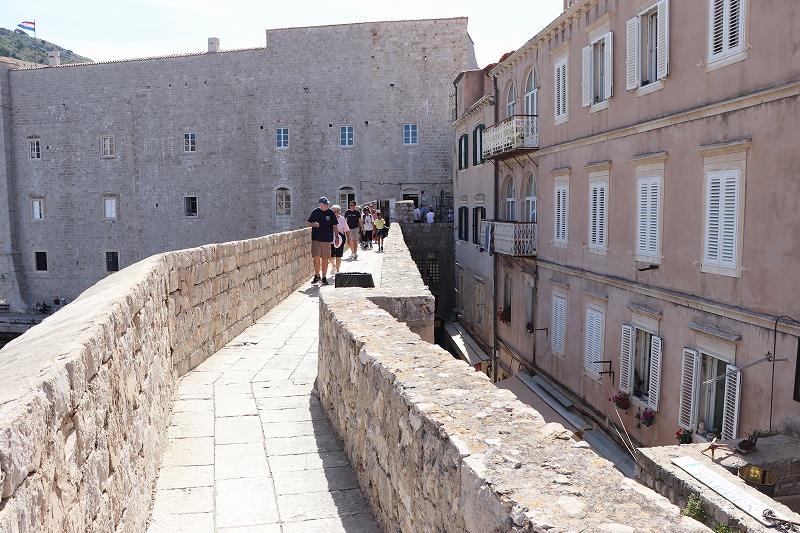
Old Town Views to the East, Adriatic Sea Views to the West
One of the things that impressed me most while walking along the walls was how dramatically the scenery changes depending on where you are.
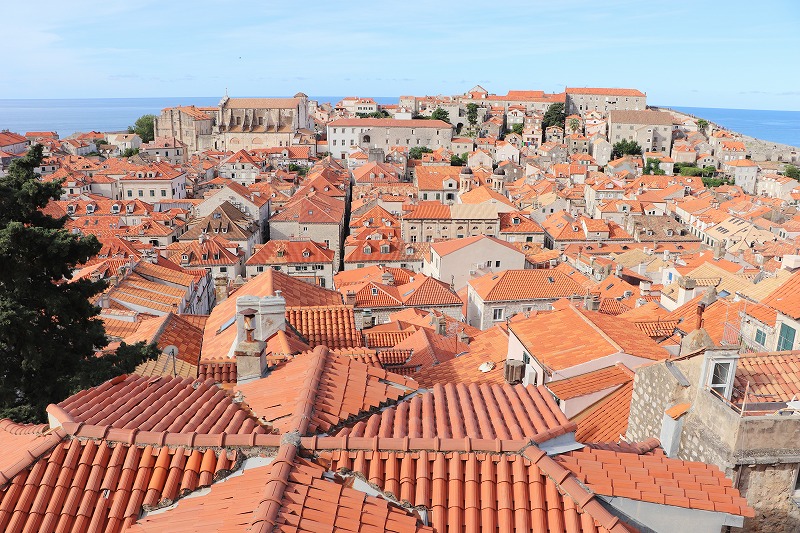
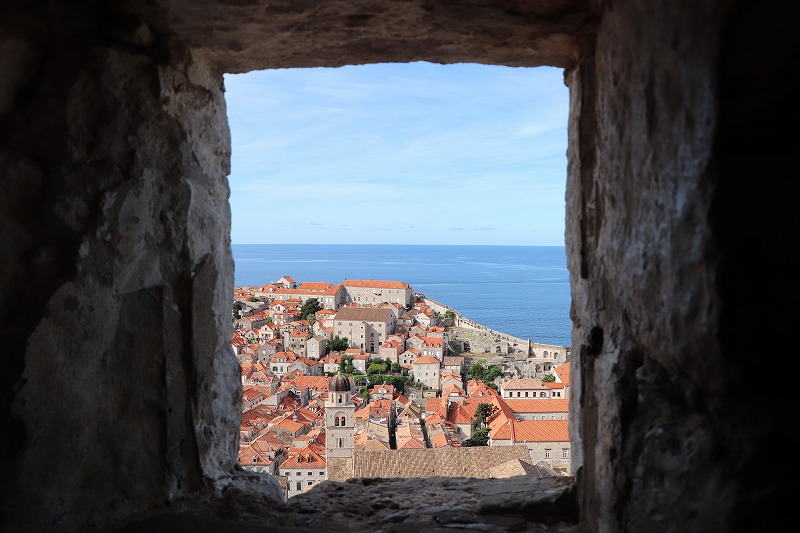
On the eastern side, you get beautiful views of the Old Town, with its dense collection of red-tiled rooftops.
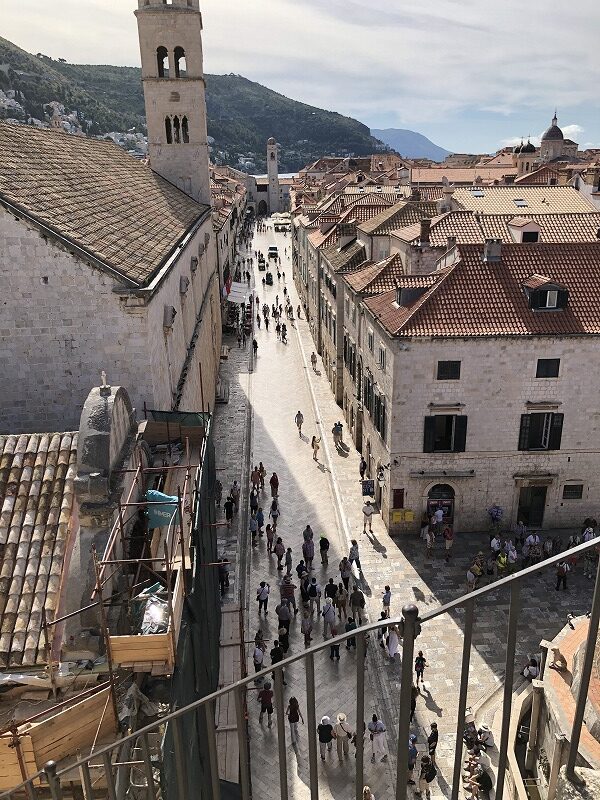
It feels almost as if you are looking down on a medieval city from above.
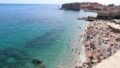
On the western side, meanwhile, you are greeted by spectacular views of the Adriatic Sea.
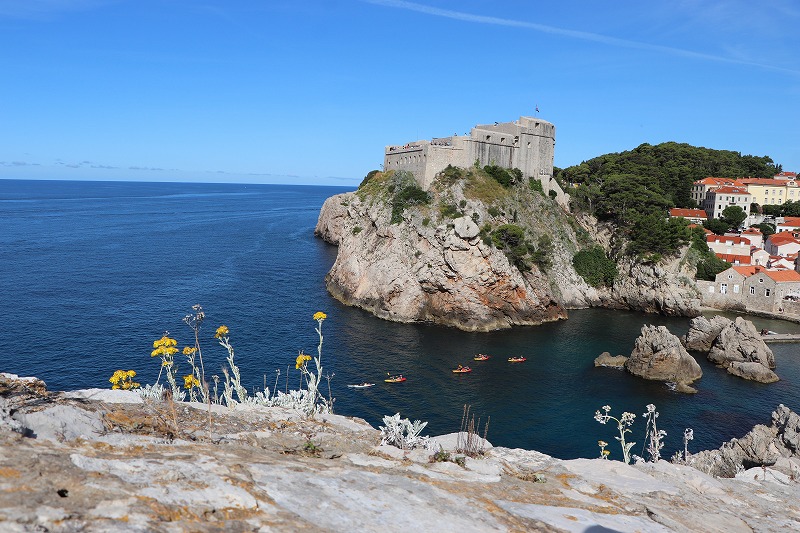
The combination of the sparkling blue sea, rocky coastline, and white stone walls is absolutely beautiful. It is easy to understand why Dubrovnik is known as the “Pearl of the Adriatic.”
The people kayaking in the photos looked like they were having a great time, too.
Along the way, you can also enter Minčeta Fortress, one of the highest points along the walls.
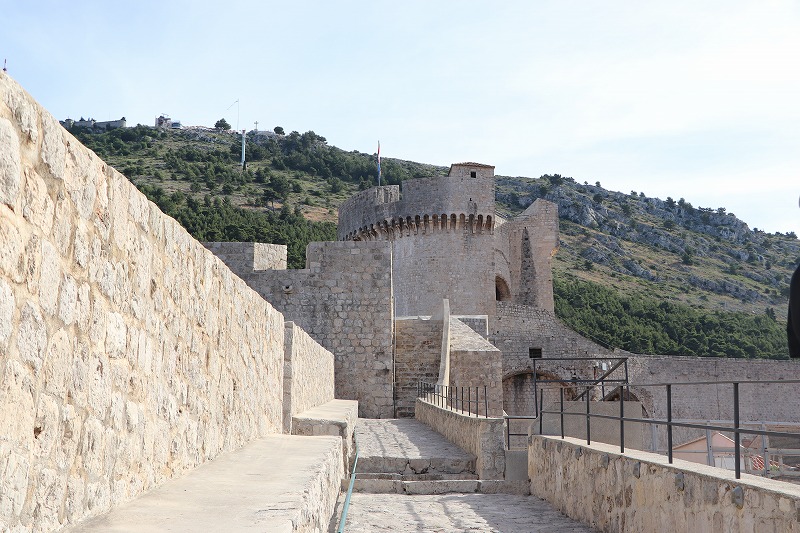
You can explore the inside of the fortress, but personally, it felt more like a place to enjoy the views from the walls than a site where you spend a lot of time examining the historic architecture.
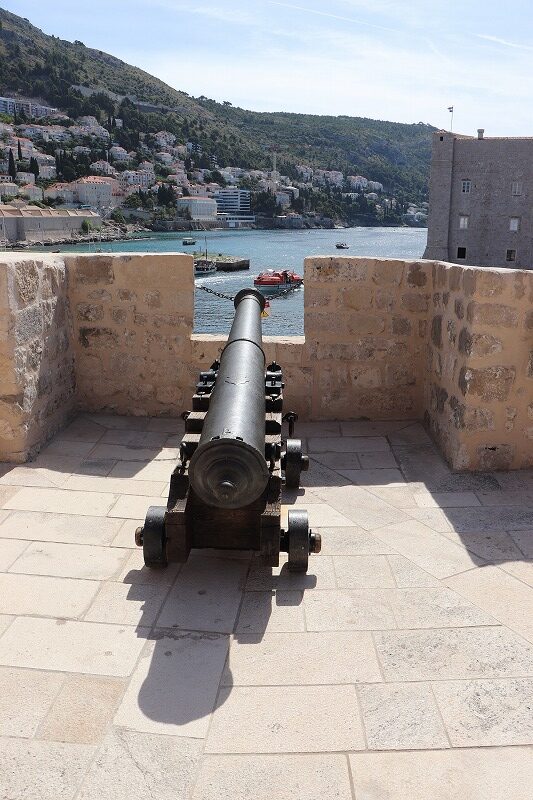
Cannons can be found throughout Dubrovnik, not just at the fortress. Perhaps this was typical of medieval cities, but it really drove home the fact that the entire city once functioned as a massive fortress.
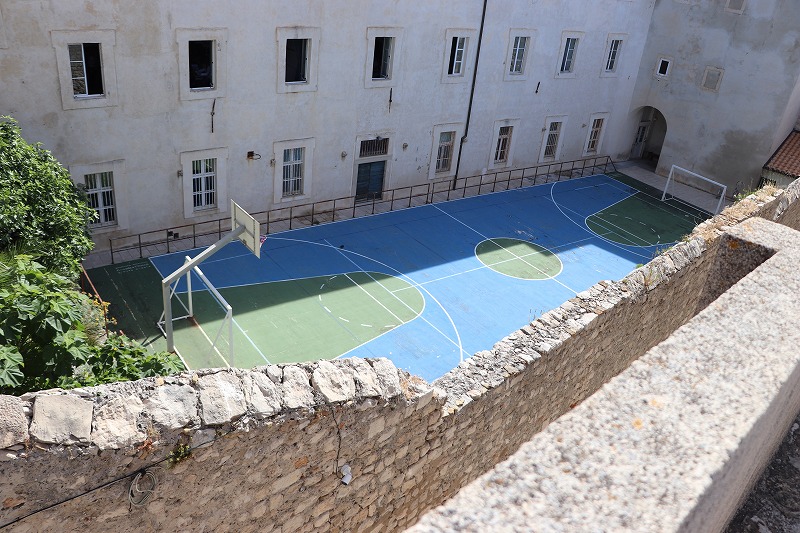
At the same time, I also came across a basketball court used by local residents. It reminded me that this is not just a tourist attraction but also a place where people actually live their daily lives.
Traces of the Croatian War of Independence
As you walk along the walls, you will see information panels in various places explaining that certain sections were destroyed during attacks by Serbian forces.
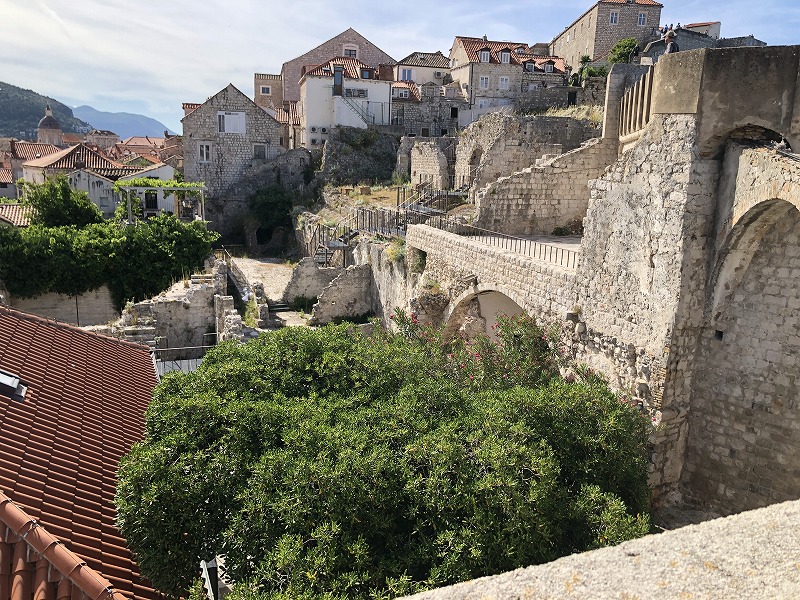
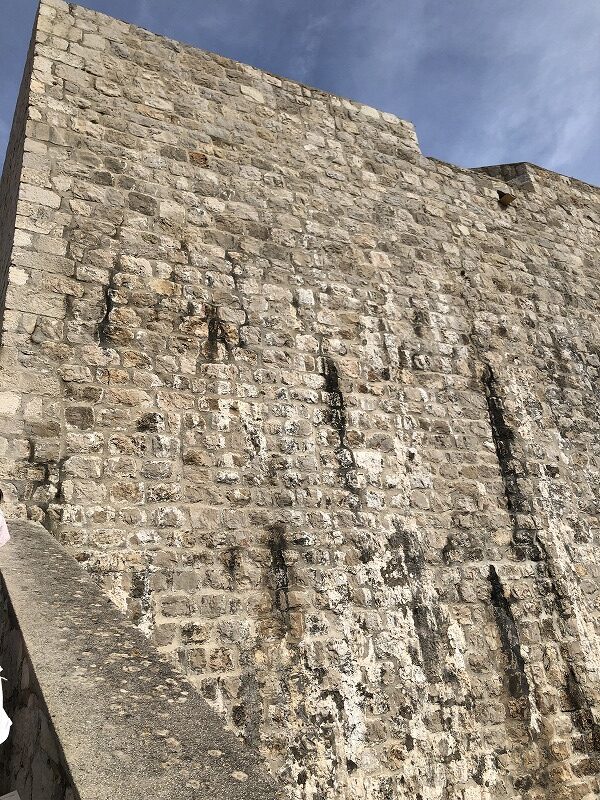
The present-day Old Town has been beautifully restored, but behind that beauty lies the history of the conflict in the 1990s.
It made me realize once again that Dubrovnik is not simply a tourist destination, but also a place where you can feel the weight of history.
Visit Early in the Morning in Summer
One piece of advice I received very strongly from the owner of our accommodation was:
“You should visit the city walls first thing in the morning.”
I followed that advice and entered right at 8:00 a.m. when the walls opened.
It turned out to be absolutely the right decision.
There were still relatively few tourists in the morning, which meant:
- No line at the ticket counter
- No waiting at the entrance
- Much easier conditions for taking photos
By around noon, however, temperatures can rise to nearly 30°C.
There is very little shade on top of the walls, so walking around in the middle of a hot summer day can be quite challenging.
I visited in early summer, but even then it already felt quite hot before noon.
Walking around the entire circuit also takes about two hours.
Considering that you could be walking for two hours under the sun, I definitely recommend visiting in the cooler morning hours.
The Cafés on the Walls Have Amazing Views—but They’re Expensive
There are several cafés along the city walls.
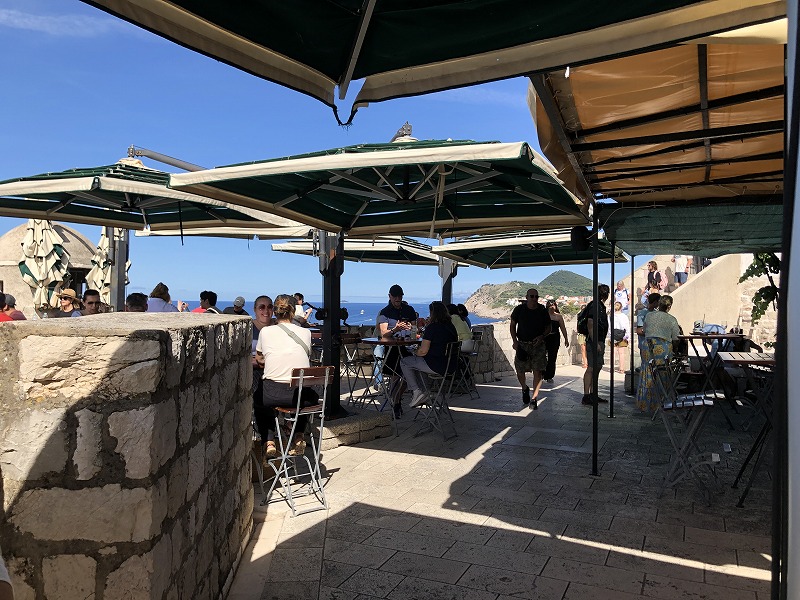
The views are fantastic, but the prices are definitely tourist prices.
From what I saw, a cocktail cost around €13.
It would be nice to enjoy a drink while taking in the scenery, but I decided to skip it this time.
A drink with a view like that is probably worth the price for some people, but it was still a little difficult to justify(笑).
One of my Austrian friends actually warned me about the high prices as soon as I told them I was going to Dubrovnik, so I was prepared for it(笑).
There are souvenir shops as well! …although I wasn’t particularly tempted to go inside, so I only took a photo from outside.

(当ブログの記事をまとめたポータルページはここです)
(オンラインショップを始めてみました。是非こちらからご覧になってください。)
Amazon.co.jp
あなたと一緒に作る海外旅行【トラベル・スタンダード・ジャパン】
Conclusion
The Dubrovnik city walls offer one of the most spectacular viewpoints in the city, allowing you to enjoy both the historic Old Town and the Adriatic Sea at the same time.
The €40 admission fee is certainly not cheap, but considering that you can experience all of the following in one visit:
- The UNESCO-listed Old Town
- Spectacular views of the Adriatic Sea
- Minčeta Fortress
- The history of the Croatian War of Independence
I think the city walls are an essential part of any Dubrovnik itinerary.
Visiting first thing in the morning is especially recommended during the summer.
If you are visiting Dubrovnik, get up early and take a walk along the city walls. The views of the red-roofed Old Town and the blue Adriatic Sea are something you will likely remember for a long time.

コメント