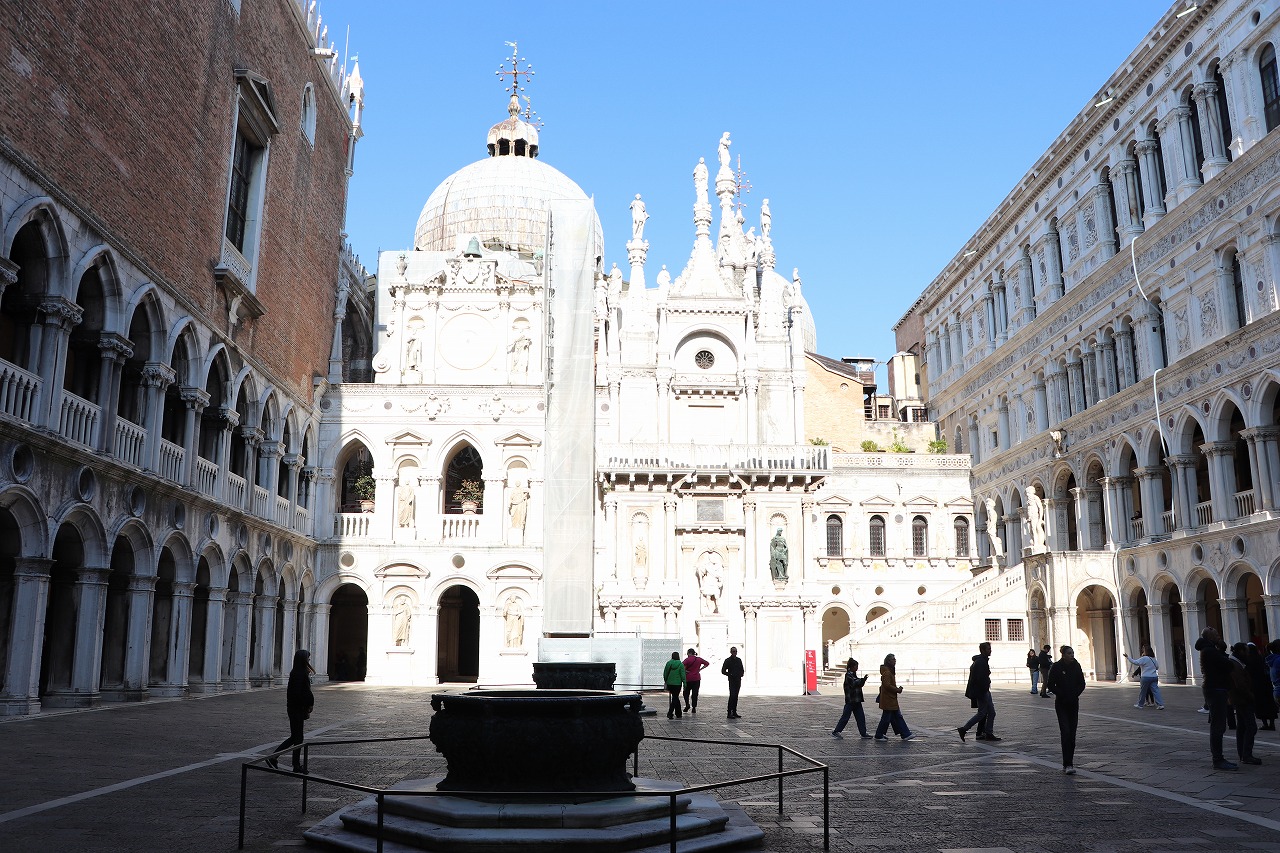
I’ve already written about some of Venice’s most famous sights, including St. Mark’s Basilica and Doge’s Palace.
This time, I’d like to focus on traveling from Graz to Venice, as well as some of the things I discovered while exploring Venice itself.
From the scenery seen through the train window to the charm of Venice’s islands and some of the city’s unexpected sides, these are all impressions and experiences that you can only really understand by visiting in person.
(当ブログの記事をまとめたポータルページはここです)
(オンラインショップを始めてみました。是非こちらからご覧になってください。)
Amazon.co.jp
あなたと一緒に作る海外旅行【トラベル・スタンダード・ジャパン】

- 1: How to Get from Graz to Venice? FlixBus Is the Cheapest Option, But…
- 2: Spectacular Scenery Between Klagenfurt and Venice
- 3: Getting Around Venice by Vaporetto: Be Careful About How the Tickets Work
- 4: The Entire City Looks Like a Painting — Venice Is One Big Tourist Attraction
- 5: Murano and Burano — What I Loved and What Disappointed Me
- 6: Around Rialto Bridge — Souvenirs and Great Food
- 7: San Giorgio Maggiore — A Quiet Escape from the Crowds
- 8: Venice Gets Surprisingly Dark at Night!
- Conclusion: Venice Feels Completely Different Depending on How You Travel
1: How to Get from Graz to Venice? FlixBus Is the Cheapest Option, But…
There are several ways to travel from Graz, Austria, to Venice.
If you want to get there as cheaply as possible, FlixBus is probably the best option.
The bus departs from Graz Webling.
Even when booking shortly before departure, you can often find a one-way ticket for around €40, and the journey takes approximately five hours without a transfer.
Although it’s a bus, the biggest advantage is that it can be both faster and cheaper than taking the train.
For solo travelers or students, this is definitely an option worth considering.
On the other hand, traveling with ÖBB, Austria’s national railway, is a little more complicated.
First, you take a bus from Graz to Klagenfurt, which takes about two hours, and then continue by train to Venice.
The entire journey takes around seven hours, with fares generally costing more than €60.
However, trains are generally more comfortable and offer a smoother ride than buses.
For families or travelers who are not used to long-distance journeys, this option may be more relaxing.
There was also some good news at the time of my trip: from December 2025, a new route was scheduled to open after tunnel construction was completed, allowing direct travel from Graz to Venice in around four hours.
If the new route is operating when you travel, it may be worth planning your trip around it.
2: Spectacular Scenery Between Klagenfurt and Venice
The bus route is convenient, but traveling by train has its own charm.
The section between Klagenfurt and Venice takes you through mountainous landscapes and is almost like a journey straight out of a travel documentary.
The train winds its way through Alpine valleys, with occasional views of lakes and small villages.
The scenery is beautiful enough to make you forget how much time has passed.
It was one of those journeys where I thought, “I’m really glad I took the train, even though it took longer.”

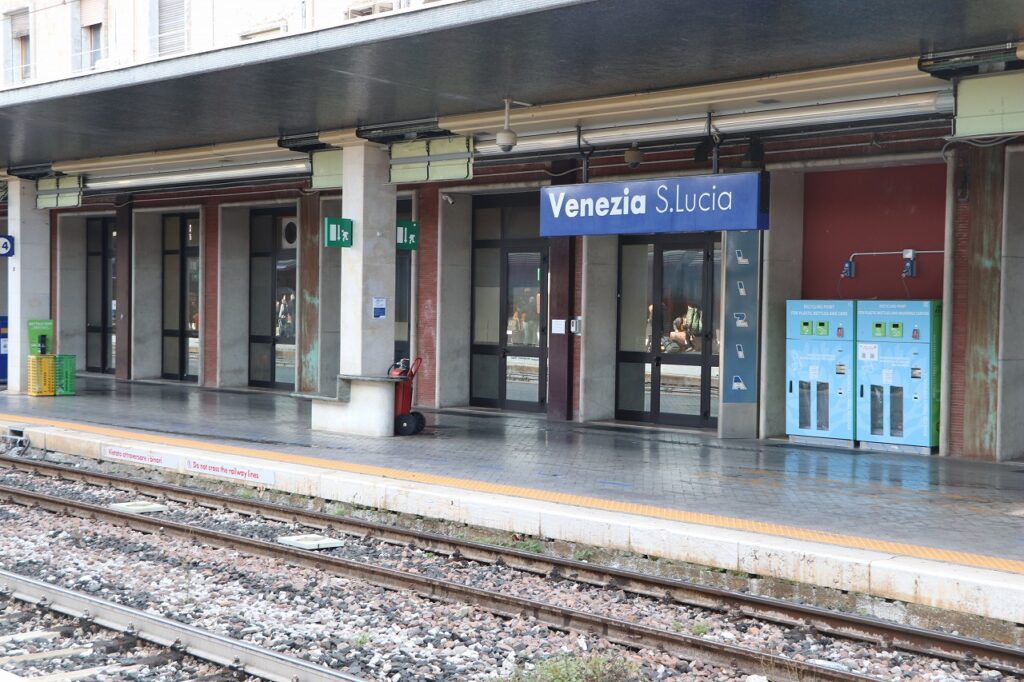
3: Getting Around Venice by Vaporetto: Be Careful About How the Tickets Work
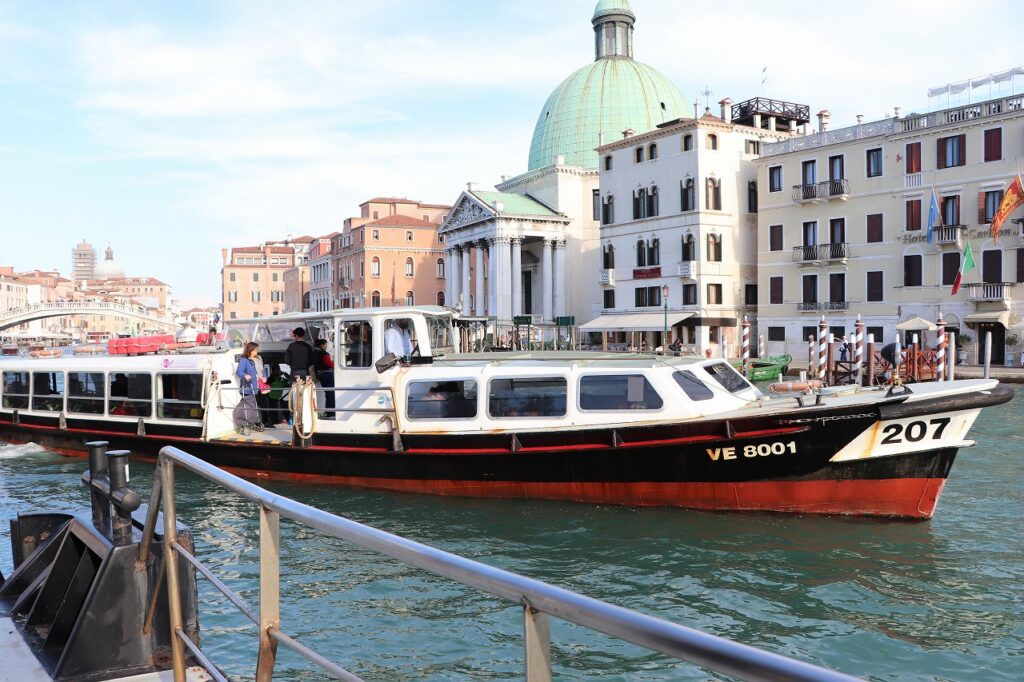
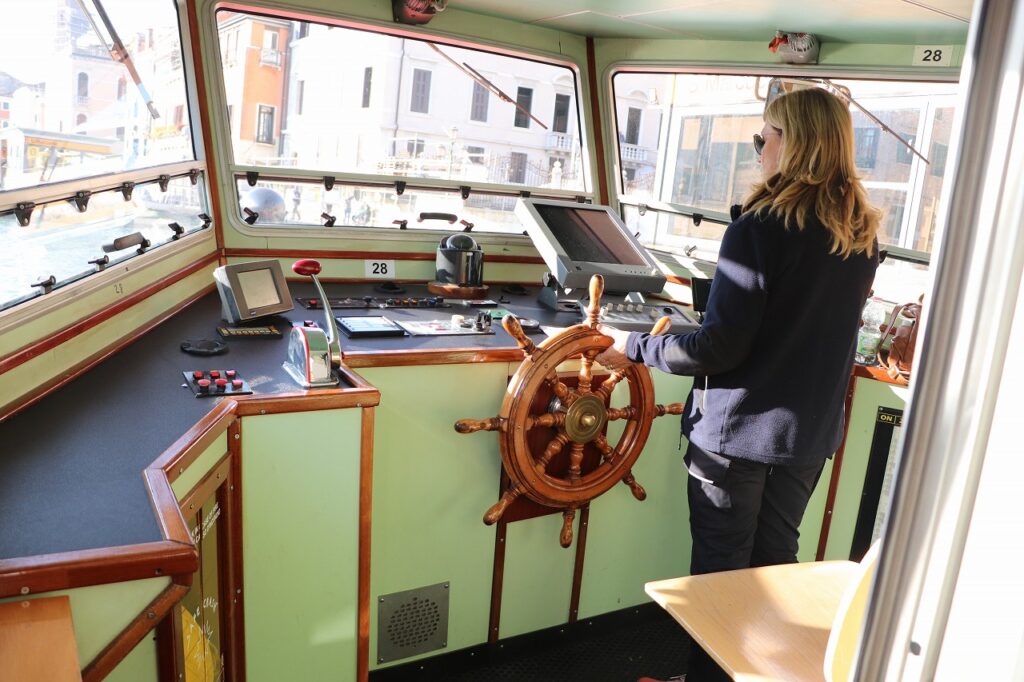
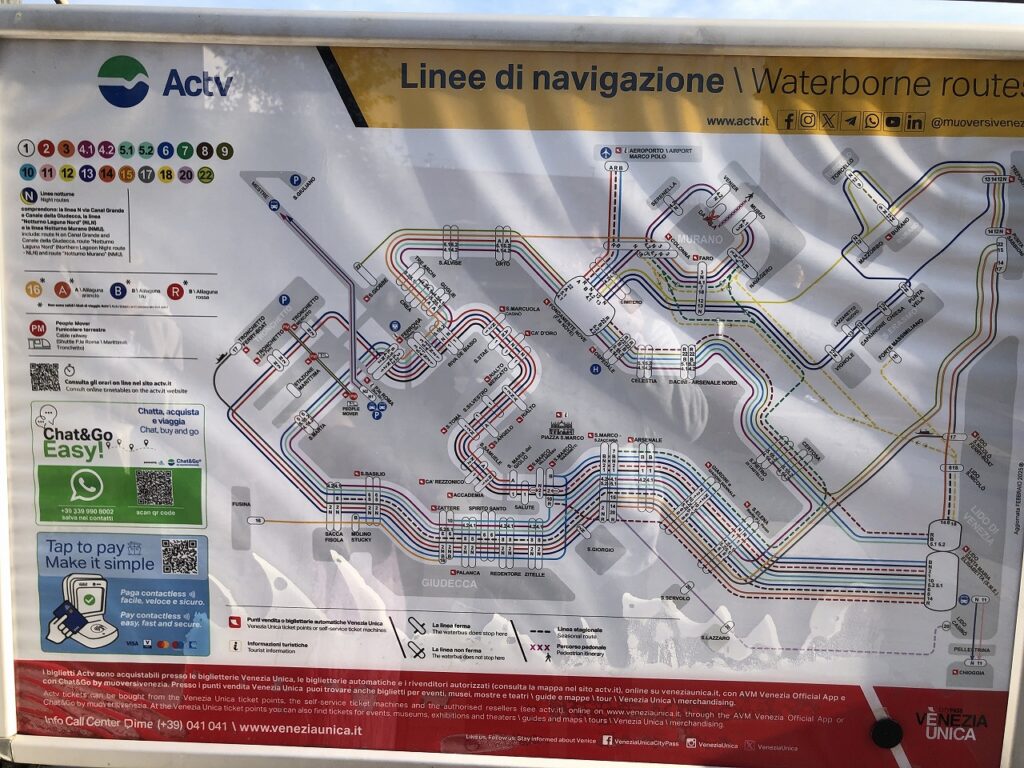
When you think of getting around Venice, the vaporetto, or water bus, is one of the main forms of public transportation.
Tickets are often described as “1-day” or “2-day” passes, but they are actually valid for 24 or 48 hours.
For example, if you purchase a 2-day pass at 3 p.m., you can use it until 3 p.m. two days later.
It remains valid even after midnight, so understanding this system can be very useful when planning your itinerary.
Major stops popular with tourists, such as Rialto Bridge and St. Mark’s Square, have gates that require a valid ticket for entry.
Some smaller stops farther away do not have gates, and honestly, they can look like places where you could get away with boarding without paying. Of course, I absolutely do not recommend doing that.
4: The Entire City Looks Like a Painting — Venice Is One Big Tourist Attraction
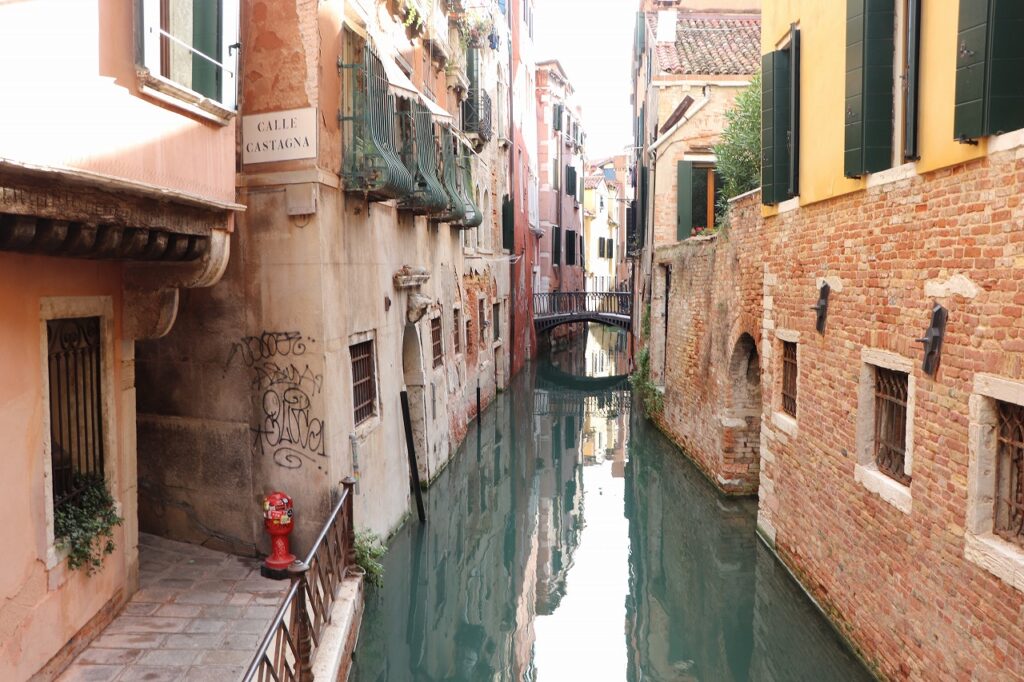
One of the most amazing things about Venice is that almost every corner is beautiful.
Even streets that are not tourist attractions can look like scenes from a movie.
Simply walking through the maze-like alleyways made me feel that the entire city itself is one giant work of art.
5: Murano and Burano — What I Loved and What Disappointed Me
Murano
Murano is famous for its glassmaking tradition.
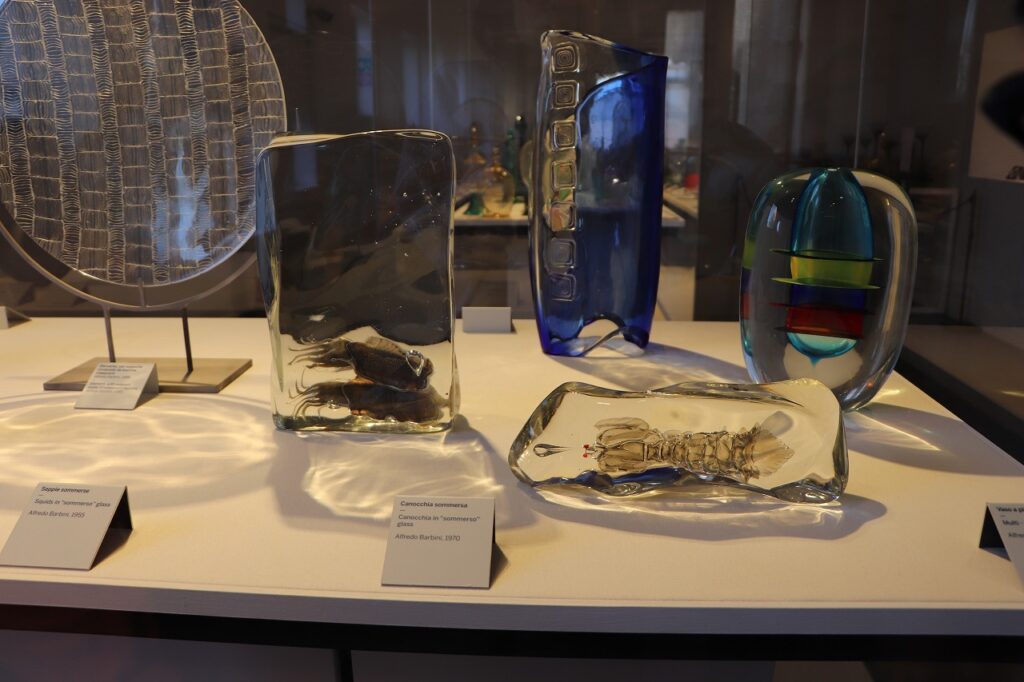
Since I was there anyway, I also visited the Glass Museum (Museo del Vetro).
…But honestly, I found it a little disappointing.
The exhibits looked somewhat faded, and I wouldn’t say they had the dazzling brilliance I had expected.
On the other hand, the museum will store large luggage at the reception, which is convenient compared with some churches and palaces where baggage restrictions can be stricter.
Burano
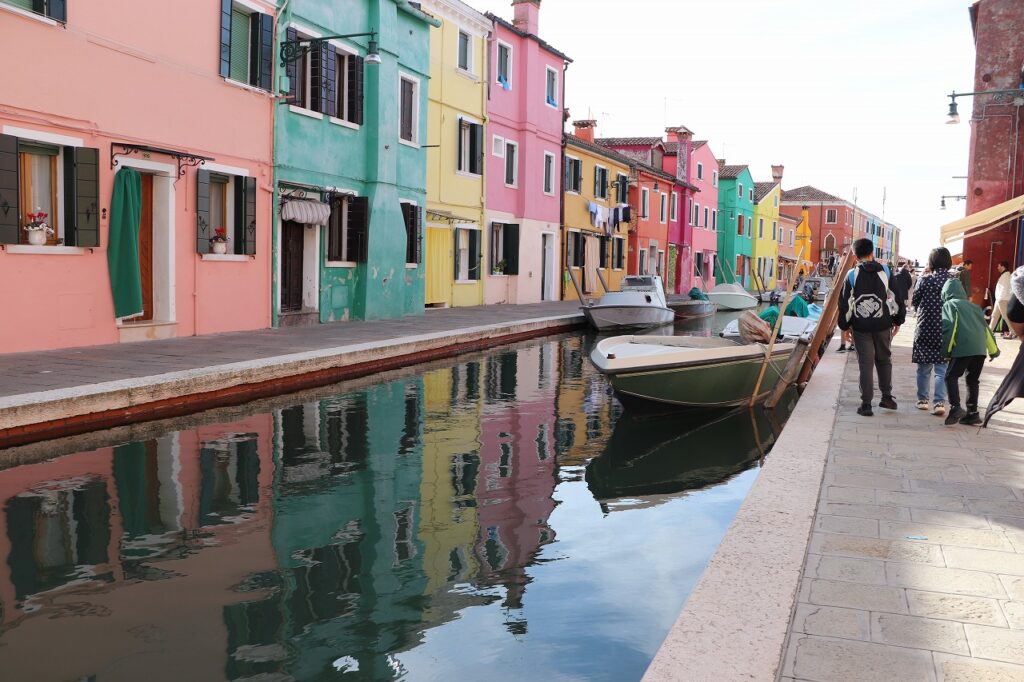
Burano, on the other hand, is absolutely adorable, thanks to its colorful rows of houses.
Almost every street looks like a perfect photo spot, making it an amazing destination for photography lovers.
It is more crowded with tourists than Murano, but I still think it is well worth visiting.
6: Around Rialto Bridge — Souvenirs and Great Food
Inside and around Rialto Bridge, you’ll find rows of souvenir shops.
One pleasant surprise is that prices can actually be relatively reasonable compared with other tourist areas.
That said, even when something is labeled “Murano glass,” it can be a little questionable whether it is actually genuine Murano glass.(笑)
The food around this area can also be surprisingly affordable.
Some restaurants offer pasta for around €10.
If you are traveling on a budget, another option is to buy warm bread from a supermarket for just €2–3.
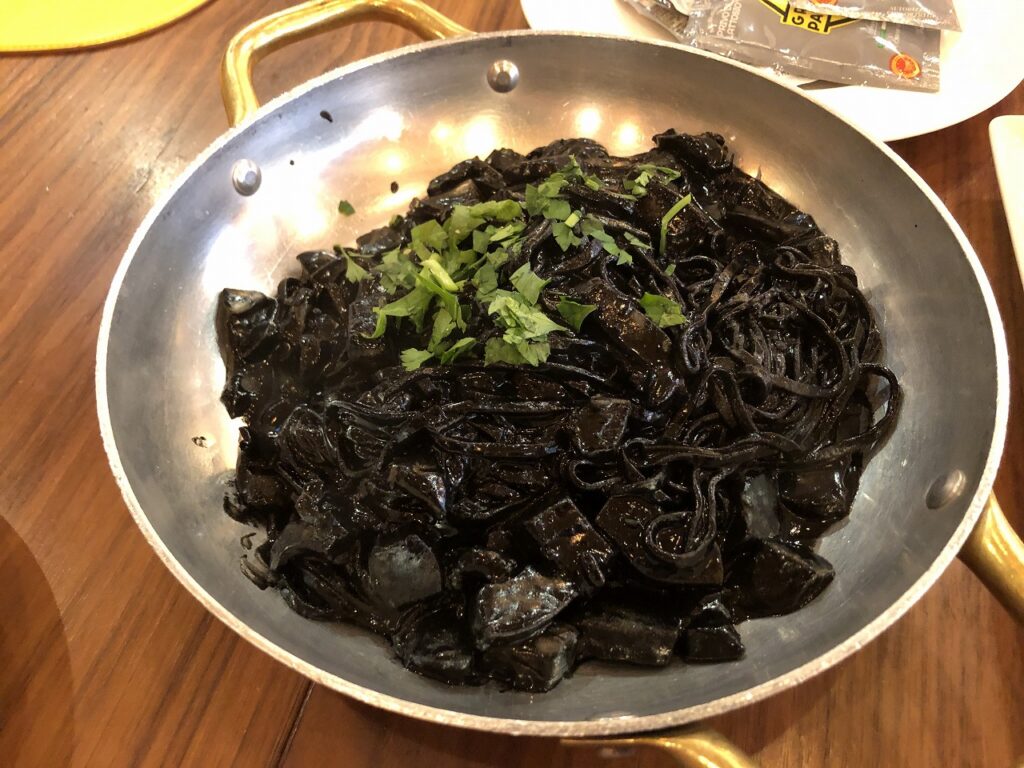
🍝 Don’t Leave Venice Without Trying Squid Ink Pasta!
If you visit Venice, one dish I strongly recommend trying is Spaghetti al Nero di Seppia, or squid ink pasta.
The umami of the squid ink combined with olive oil and garlic creates a surprisingly rich flavor despite the dish’s simplicity.
It looks completely black and certainly makes an impression, but after the first bite, you’ll understand why it feels like the taste of a city surrounded by the sea.
Some restaurants add generous pieces of squid, making it quite filling as well.
One thing to remember: after eating it, your teeth may turn completely black.
So make sure to check your smile before taking any photos! (笑)
You can find authentic squid ink pasta for around €15–18 at trattorias around Rialto Bridge and near St. Mark’s Square.
7: San Giorgio Maggiore — A Quiet Escape from the Crowds
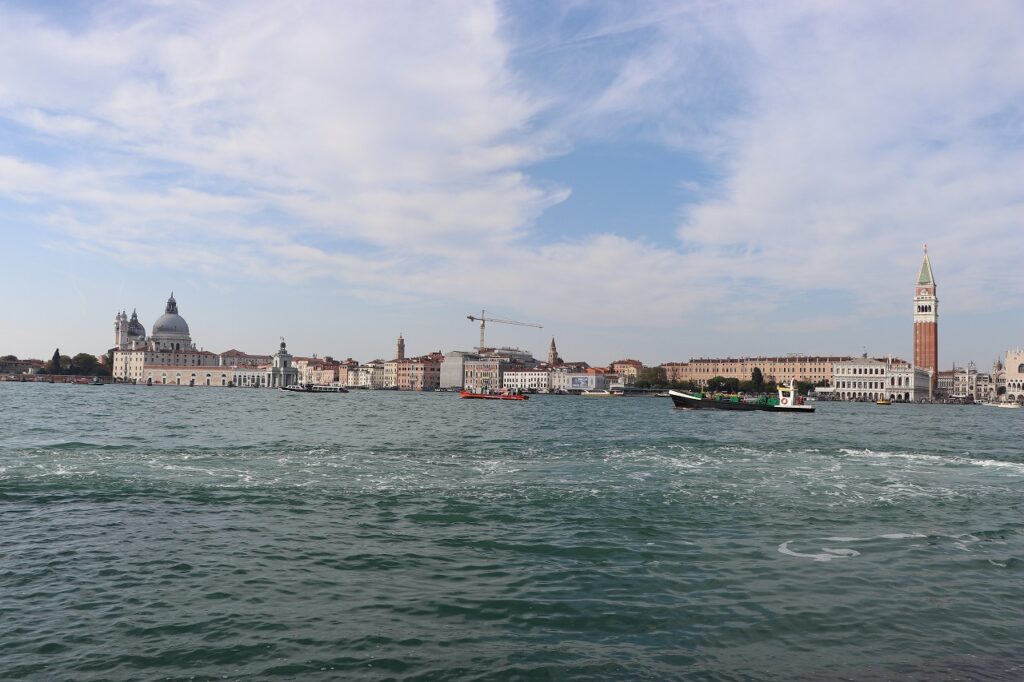
Located directly across from Doge’s Palace, San Giorgio Maggiore is a relatively quiet island with fewer tourists.
If you go up the bell tower, you can enjoy a direct view toward St. Mark’s Square.
It is a great place to escape the crowds and enjoy a more peaceful side of Venice.
If you simply want to sit back and admire Venice in peace, this is a great spot.
8: Venice Gets Surprisingly Dark at Night!
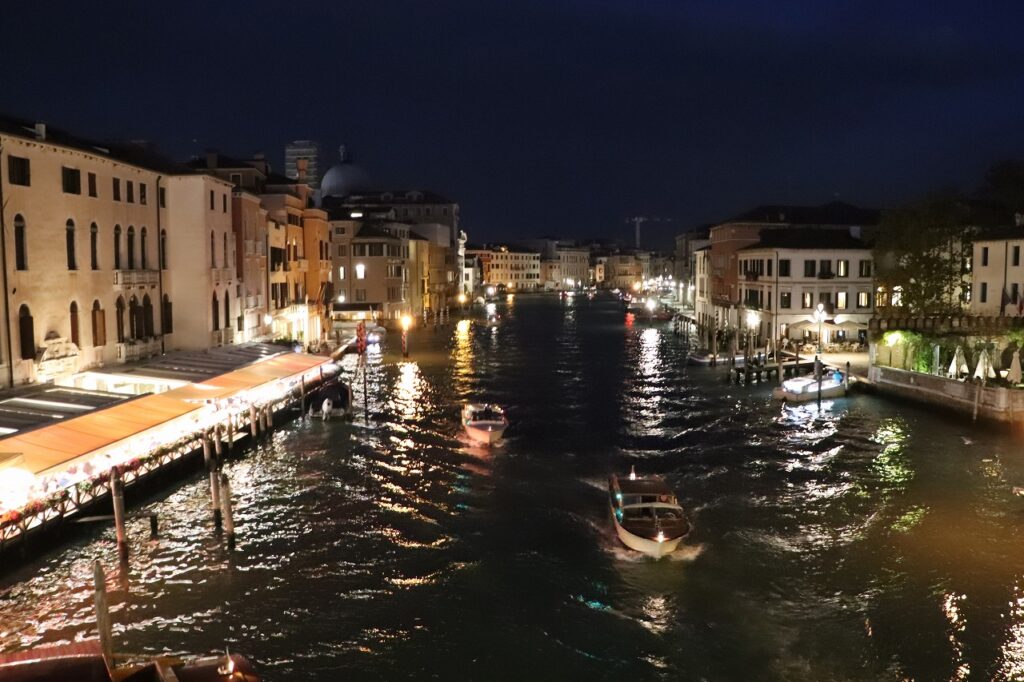
Venice is lively and crowded during the day, but the atmosphere changes completely at night.
Outside the main tourist areas, the narrow streets can be quite dark and confusing, and honestly, walking alone can feel a little intimidating.
If you go out at night, it is safer to stick to well-lit areas such as St. Mark’s Square and the area around Rialto Bridge.
The maze-like backstreets are best explored during the daytime, when you can take your time and enjoy them without worrying about getting lost.
(当ブログの記事をまとめたポータルページはここです)
(オンラインショップを始めてみました。是非こちらからご覧になってください。)
Amazon.co.jp
あなたと一緒に作る海外旅行【トラベル・スタンダード・ジャパン】
Conclusion: Venice Feels Completely Different Depending on How You Travel
Venice can feel like a completely different city depending on how you get there, where you stay, and what time of day you explore.
Even the journey from Graz can become part of the adventure itself.
Finding a quiet corner among the crowds, or simply eating a piece of bread on a picturesque street corner—
I think these small moments are what make Venice so special.


コメント