- Introduction
- How to Find a Doctor in Austria | Appointments Are Usually Required
- What Is an e-card? | Austria’s Health Insurance Card
- How to Use Your e-card | Simply Place It on the Reader
- Is Medical Treatment Free? | Things to Keep in Mind
- Conclusion | The System May Seem Confusing at First, but the Basics Are Simple
Introduction
One of the things many people worry about when living abroad is how to use the healthcare system. When the language and system are different from what you are used to, it can be difficult to know what to do when you suddenly get sick or need to see a doctor.
In Austria, the e-card is used as the equivalent of a health insurance card. It is required when using Austria’s public health insurance system, and presenting it at a hospital or clinic allows you to receive treatment covered by your insurance.
In this article, I will explain how to find a doctor or clinic in Austria and how to use your e-card when you visit a medical facility.
(当ブログの記事をまとめたポータルページはここです)
(オンラインショップを始めてみました。是非こちらからご覧になってください。)
Amazon.co.jp
あなたと一緒に作る海外旅行【トラベル・スタンダード・ジャパン】

How to Find a Doctor in Austria | Appointments Are Usually Required
Unlike in Japan, it is not very common in Austria to simply walk into a hospital and ask to see a doctor. At many clinics, you need to make an appointment in advance, so the first step is usually to contact a clinic and book an appointment.
For example, if you live in Styria, the search page of the Ärztekammer für Steiermark (Medical Chamber of Styria) is very useful. You can search for doctors and clinics based on criteria such as:
- Medical specialty, such as internal medicine or dermatology
- Area where you live
- Your health insurance provider
- Languages spoken by the doctor or clinic
After entering these conditions, several suitable clinics will appear in the search results. Once you have found a few candidates, you can contact the clinic by email or phone to make an appointment.
From my personal experience, I get the impression that phone calls are often preferred in Austria. Some clinics, in fact, only provide a telephone number as their contact information.
That said, many clinics also respond to emails within a few days. However, it is worth keeping in mind that popular clinics can sometimes be fully booked for several months in advance. If that happens, you may have no choice but to look for another clinic and contact them instead.
Austria also has private clinics that are not covered by public health insurance. These clinics are more expensive, but one advantage is that it can be easier to get an appointment. Some Austrians reportedly choose private clinics specifically because they do not want to wait a long time for an appointment.
What Is an e-card? | Austria’s Health Insurance Card
The e-card is used when receiving medical treatment through Austria’s public health insurance system. It is similar to a health insurance card in Japan and is generally required when receiving treatment covered by public insurance.
The card used to be a simple insurance card, but photo ID e-cards have also been introduced. You may see posters and flyers encouraging people to switch to the photo version. This appears to be part of efforts to prevent the misuse of health insurance cards, similar to measures being introduced in other countries.
How to Use Your e-card | Simply Place It on the Reader
When you visit a hospital or clinic, you will usually find a card reader near the reception desk. Simply place your e-card on the reader to register your insurance information.
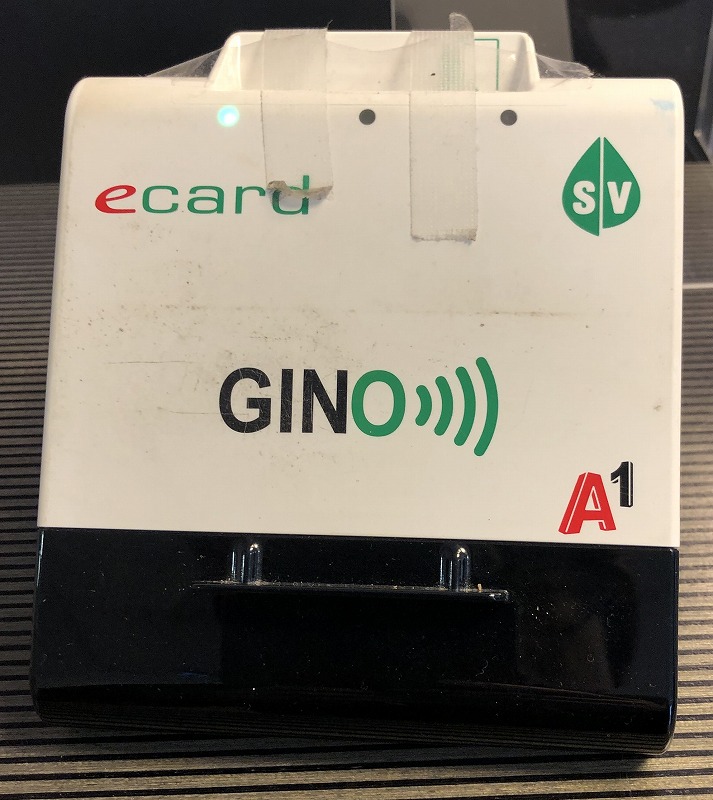
The process is very simple:
- Place your e-card on the reader at reception
- Your insurance information is read
- Your registration is complete
That’s basically it.
Unlike Japan’s My Number Card, you do not need to enter a PIN. The card does not have this type of setting, so in most cases, simply placing the card on the reader is enough to complete the process.
Is Medical Treatment Free? | Things to Keep in Mind
If you visit a clinic covered by public health insurance, the consultation itself is often covered by insurance. However, this does not necessarily mean that everything is completely free.
For example, you may have to pay additional fees such as a service fee, as well as the cost of prescription medication. In particular, medication is normally charged separately, so it is important to remember that having health insurance does not mean that every medical expense is free.
There are also cases where you may need to see a general practitioner first and obtain a referral (Zuweisung) before visiting a specialist. The referral contains information such as the specialist or hospital you are being referred to, the diagnosis, and the type of examination requested by the general practitioner. Without a referral, treatment by a specialist may not be covered by public health insurance.
Furthermore, if you receive additional treatment that is not listed on the referral, part of the treatment may be treated as private care. In such cases, you may have to pay the full amount upfront and later receive a refund to the bank account specified when you submit the necessary documents.
This means that you may temporarily need to pay the entire amount yourself in advance, so it is important to be prepared for this possibility.
The refund is generally calculated based on 80% of the lowest amount that would have been charged for the same treatment under the public system. As a result, the amount you initially have to pay yourself can be significantly more than 20% of the total bill.
However, the refund system can be complicated. Even if an additional treatment was initially treated as private care, it may later be determined that the treatment was medically necessary as part of the overall course of treatment. In that case, it may ultimately become fully covered by insurance and the full amount may be reimbursed.
In other words, sometimes you simply cannot know the final cost until the entire treatment process is complete.
Conclusion | The System May Seem Confusing at First, but the Basics Are Simple
Austria’s healthcare system is different from Japan’s in several ways, so it may feel confusing at first. In particular:
- Appointments are generally required
- You may have to wait several months for an appointment
These are some of the biggest differences compared with the Japanese healthcare system.
On the other hand, using the e-card, which serves as your health insurance card, is very simple. In most cases, you simply place the card on the reader at the clinic or hospital to register your insurance.
When living abroad, knowing how the local healthcare system works in advance can make a big difference when you actually need medical care. If you are planning to live in Austria or are already staying here long-term, I hope this guide helps you feel a little more prepared.

コメント