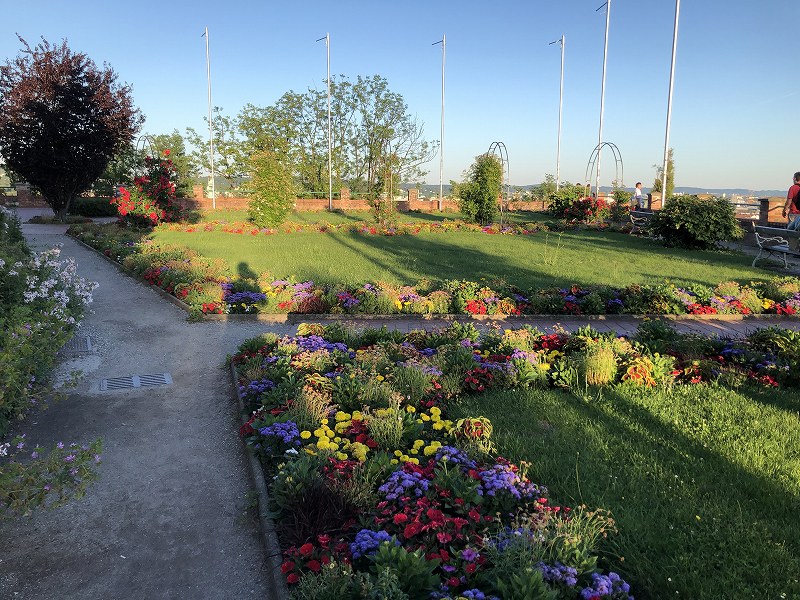
Dealing with the Summer Heat in Graz
In 2026, Europe experienced two major heatwaves, one in late May and another in late June. While the extreme heat in France and Spain received a lot of media attention, Graz, Austria, was also affected.
Compared with larger cities such as Paris and Vienna, Graz has plenty of greenery, and temperatures in the city tend to be a few degrees lower. Even so, temperatures reached around 30°C in late May and climbed as high as 37°C in late June.
However, there is one major difference compared with Japan: the humidity is much lower.
In Japan, summer humidity is often above 60%, while in Graz, humidity can remain around 50% even during a heatwave and often drops below 50% on other days.
Another major difference is nighttime temperatures. In Japan, temperatures can remain close to 30°C throughout the night, creating what is known as a tropical night. In Graz, however, nighttime temperatures generally drop to around 24°C even during hot periods, giving your body a chance to cool down and recover.
Of course, 37°C is still extremely hot, but the experience is somewhat different from the heavy, humid heat that is common in Japan.
(当ブログの記事をまとめたポータルページはここです)
(オンラインショップを始めてみました。是非こちらからご覧になってください。)
Amazon.co.jp
あなたと一緒に作る海外旅行【トラベル・スタンダード・ジャパン】

How to Spend Time Outdoors During a Heatwave
Of course, schools and workplaces do not simply close because of a heatwave. There are still plenty of days when you need to go outside.
One thing that makes the heat more manageable compared with Japan is, once again, the low humidity. It can feel extremely hot in direct sunlight, but the temperature feels noticeably lower as soon as you step into the shade.
For this reason, when walking around Graz on a hot day, it is important to choose routes with plenty of trees and shade.
Even if you are going to the same destination, choosing a tree-lined route can make a surprisingly big difference to how comfortable the walk feels.
Graz’s trams are another thing to keep in mind. Newer tram vehicles are equipped with air conditioning, but some of the older vehicles do not have it.
Depending on the timing, an older tram may arrive. If you have some extra time, you could even choose to wait for the next newer vehicle.
I personally did not go that far, but the difference in comfort between the newer and older trams can be quite noticeable on very hot days.
How to Stay Cool at Home Without Air Conditioning
As is often reported in Japan, air conditioning is less common in Europe than in many other parts of the world. In particular, some older buildings are not designed to accommodate outdoor air-conditioning units.
As a result, some households use portable air conditioners, with only the exhaust hose extending outside through a window.
So, what can you do if you don’t have air conditioning?
The key is that the nights are cooler and many European buildings have excellent insulation.
This is probably a method that has been used for generations, but the basic strategy is:
- Open the windows wide in the early morning and at night to cool the rooms thoroughly.
- During the day, keep the windows and curtains or blinds closed to prevent the cool air from escaping.
- Avoid using the stove or oven as much as possible during the hottest part of the day.
That is essentially how we managed the heatwave at home.
We do not have air conditioning either, but using this method, we somehow managed to get through the 37°C heatwave.
We also tried to avoid using the stove as much as possible and focused on cold dishes and meals that required minimal cooking.
Time for some Austrian food!
By late afternoon, however, the humidity inside the house gradually starts to rise. Eventually, there comes a point when opening the windows feels more comfortable again, so that is when we start ventilating the house once more.
We managed to get through this heatwave, but I have to admit that I am a little concerned about what would happen if temperatures ever exceeded 40°C.
A Secret Weapon: The Schlossberg Tunnels
Finally, I want to introduce a unique way to escape the heat in Graz.
It is the Schlossberg tunnels.
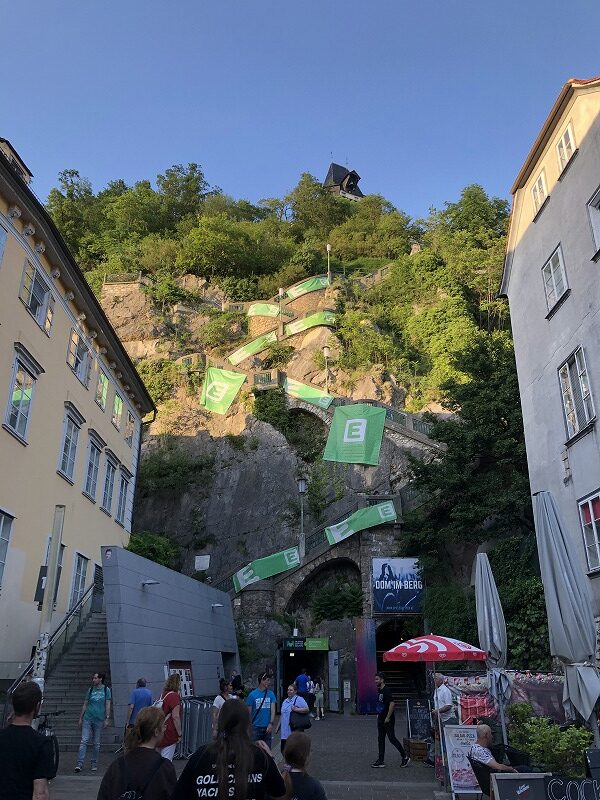
Inside Schlossberg, there are pedestrian tunnels connecting the eastern and western sides of the hill. During World War II, these tunnels were also used as air-raid shelters.
The atmosphere can feel a little imposing, but in summer, the tunnels are surprisingly cool.
Even during the recent 37°C heatwave, the tunnels felt as though they were only in the low teens Celsius. The moment you step inside, you can feel the heat disappear and your body begin to cool down.
The State of Styria also recommends using the underground facilities around Schlossberg, including the tunnels, as a way to escape the summer heat.
If the heat becomes too much while you are sightseeing in Graz, taking a short break in the Schlossberg tunnels is a great way to cool down.
The tunnels are free to use, making them something of a natural air conditioner in the heart of Graz.
(当ブログの記事をまとめたポータルページはここです)
(オンラインショップを始めてみました。是非こちらからご覧になってください。)
Amazon.co.jp
あなたと一緒に作る海外旅行【トラベル・スタンダード・ジャパン】
Conclusion
Summer heat in Graz should not be taken lightly, especially when temperatures climb into the high 30s. However, because the humidity is generally much lower than in Japan, there are ways to make the heat surprisingly manageable by making good use of shade and the cooler mornings and evenings.
In particular, these five strategies can make a big difference:
- Choose shady, tree-lined routes when walking.
- Cool your home thoroughly in the morning and at night.
- Keep the windows closed during the hottest part of the day.
- Prepare meals that do not require much cooking.
- Head to the Schlossberg tunnels when the heat becomes too much.
Keeping these five tips in mind can make it much easier to get through a hot summer in Graz.


コメント